
Emergency Driveway & Pavers Near Me: What San Francisco Homeowners Should Do First
Two pavers lifted a half inch on a Sunday, and the first contractor who answers the phone wants $800 to reset them by Tuesday. That’s usually the wrong move. In San Francisco, a suddenly sunken or heaved paver is rarely the emergency it looks like. It’s a symptom, almost always base failure or a street tree pushing from below, and a rushed patch just recreates the same failure a few months later. What you actually need is twenty minutes of measuring and photographing before anyone touches the driveway.
A quick note: if you’d rather have a trained eye look at this than sort it out alone, call (844) 797-6388 and we’ll schedule a free estimate. No dispatch theater, no “act now” pressure.
Key takeaways
- Vertical displacement under 1/2 inch is a cosmetic issue, not a trip hazard. The 1/2 inch threshold comes from ADA measurement convention, and it’s a useful line for homeowners too.
- A crack that lets water run toward the foundation matters far more than a cracked paver in the middle of the slab.
- Document measurements and photos before you call anyone. It protects you and it makes every quote you get more accurate.
- San Francisco permits and same-day reality rarely line up. A legitimate contractor will tell you what can and can’t happen in one visit.
What counts as a real paver emergency in San Francisco?
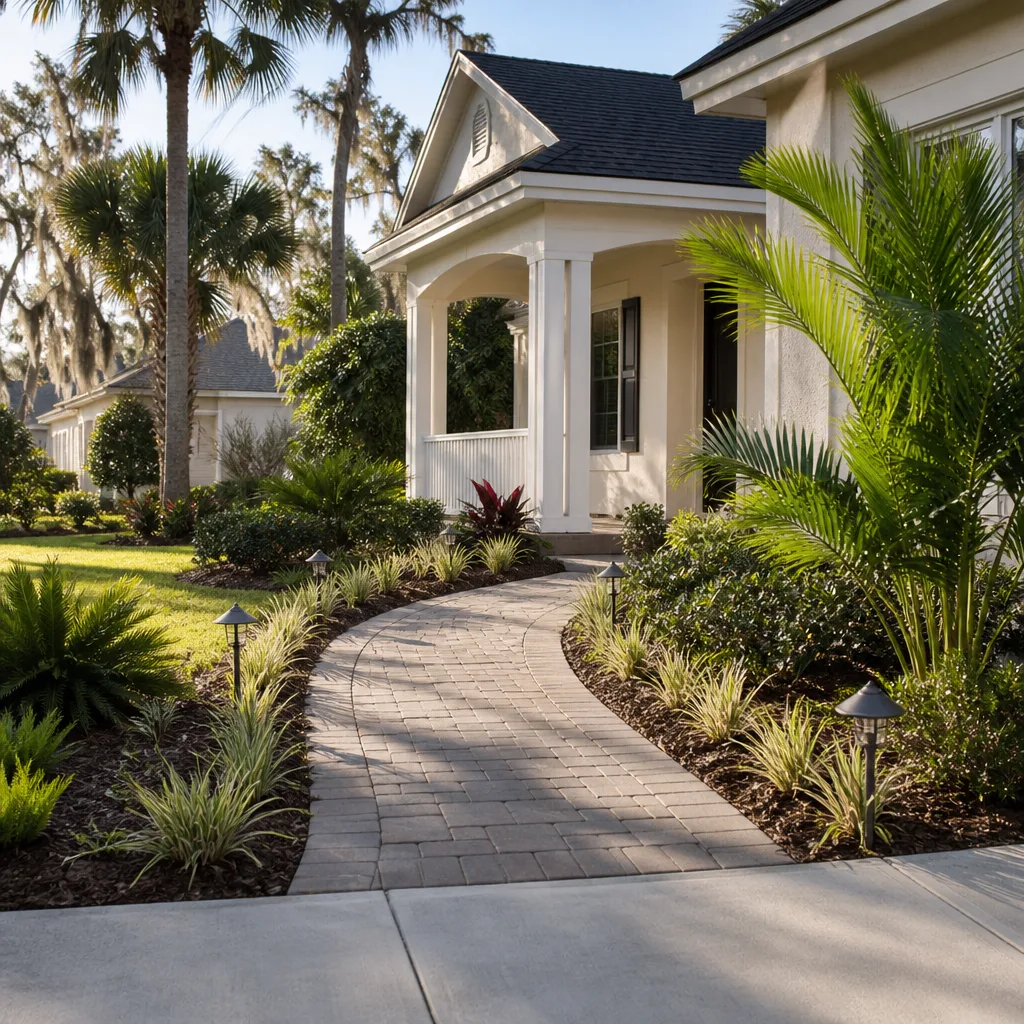
A real emergency means water is getting somewhere it shouldn’t, or someone can fall. Everything else can usually wait for a scheduled visit and a written quote. That distinction matters in a city where pavers sit close to foundations, where sidewalks meet private driveways at steep grades, and where the rainy season can turn a small joint failure into a washout in a week of steady rain.
Here’s the triage we use:
- Urgent (address within days): water channeling toward the foundation or garage slab, a paver displaced more than 1/2 inch in a walking path, or a section that moves when you step on it.
- Watch (a few weeks is fine): one or two lifted pavers away from the house, sand washing out of joints after rain, or noticeable ponding on the driveway’s low corner.
- Cosmetic (schedule when convenient): hairline joint cracks, minor color fading, stainless staining from leaf tannins. These are maintenance items, not emergencies.
The 1/2 inch figure isn’t arbitrary. It’s the vertical displacement threshold commonly used in accessibility measurement, and it’s a reasonable trigger for treating a lifted paver as a real trip hazard rather than an annoyance. Measure with a ruler or a level, not your shoe.
What causes pavers to heave or sink suddenly in San Francisco?
Three things account for most of what we see: street tree roots, clay soil moving with water, and joint sand washing out. Each one behaves differently, and each one calls for a different fix.
Lateral root pressure from street trees
San Francisco’s street trees are some of the best in the country, and their root systems don’t care where your driveway ends. Ficus, eucalyptus, and mature London plane trees push lateral roots along the shallow subgrade, and when a root encounters a paver base it lifts the section above it. The result is a small ridge – a short run of pavers that lifted together while their neighbors stayed flat. This is why the standard “reset the lifted pavers” repair fails: nothing was done about the root.
Clay soil expansion after rain
A lot of San Francisco lots sit on expansive clay, especially in neighborhoods built on former dune and marsh margins. Clay swells when it takes on water and shrinks when it dries, and a driveway base that wasn’t excavated deep enough with proper aggregate will move with it. The pattern to look for is a whole area – three or four pavers or an entire row – sinking after the first heavy rain of the season, especially where the grade drains poorly.
Failed polymeric sand joint washout
Polymeric sand locks pavers together and channels water off the surface. When it washes out – usually from a slope that sheds water too fast, or from a joint that was underfilled to begin with – individual pavers start to rock, and once they rock, they migrate. That’s what produces the single wobbly paver in an otherwise flat driveway. It’s often the cheapest fix of the three, but only if you catch it before the base underneath is compromised.
For the full picture of materials, base prep, and what a proper installation involves, our page on Driveway & Pavers in San Francisco walks through it in detail.
What should you document before calling a contractor in San Francisco?
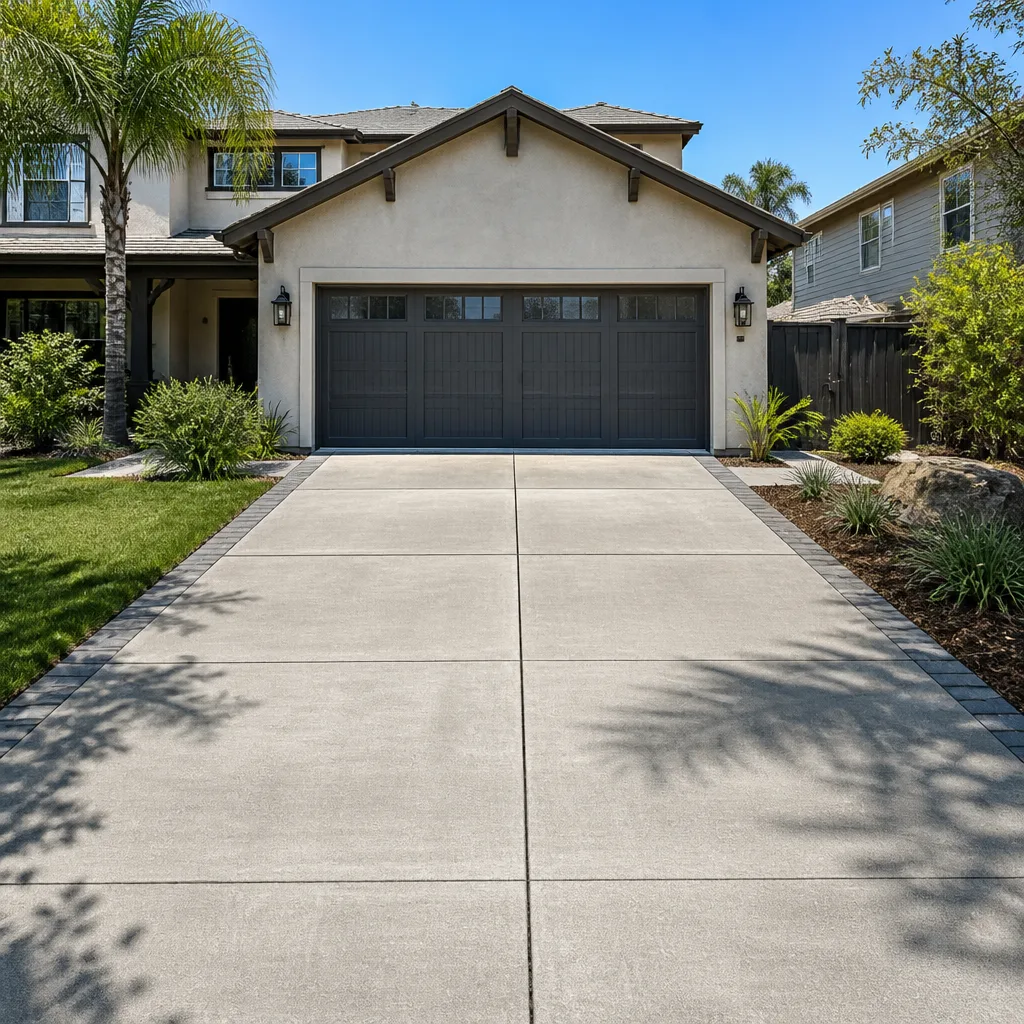
Documentation is the single most useful thing you can do while the problem is fresh. It protects you if a contractor later claims the damage was pre-existing, and it lets a contractor quote from paper instead of a guess. Here’s what to gather:
- Photos with a ruler in frame. Measure the vertical displacement at the highest point and photograph it. A photo with a tape measure in it is worth a dozen without.
- A wide shot of the whole driveway. Include the street edge, the garage door, and the house wall so a contractor can see drainage direction and proximity to the foundation.
- Close-ups of the joints and base. If a joint has washed out, photograph the exposed sand. If pavers are removed, photograph what’s underneath.
- The drainage story. Note where water pools after rain, whether the driveway slopes toward the house, and whether the problem started after a specific storm.
- Tree locations. Note every street tree or large yard tree within about ten feet of the affected section. Roots travel further than people expect.
- A rough area measurement. Length and width of the affected zone in feet. This one number changes the quote by hundreds of dollars.
Bring these to the first conversation. Any contractor quoting without them, or without a site visit, is guessing.
What can a contractor actually do the same day in San Francisco?
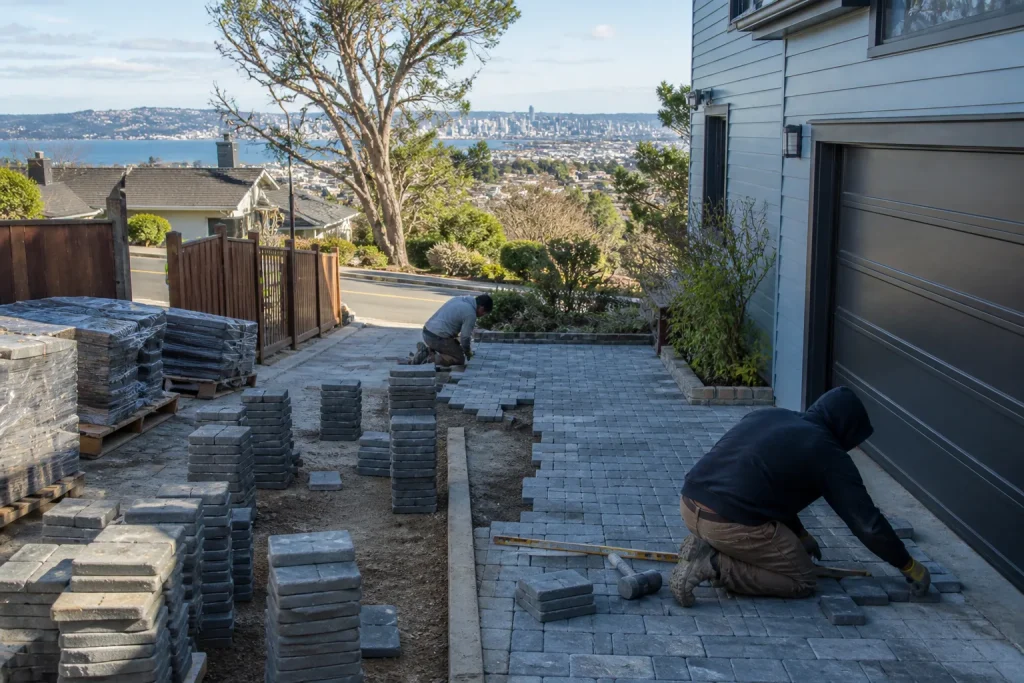
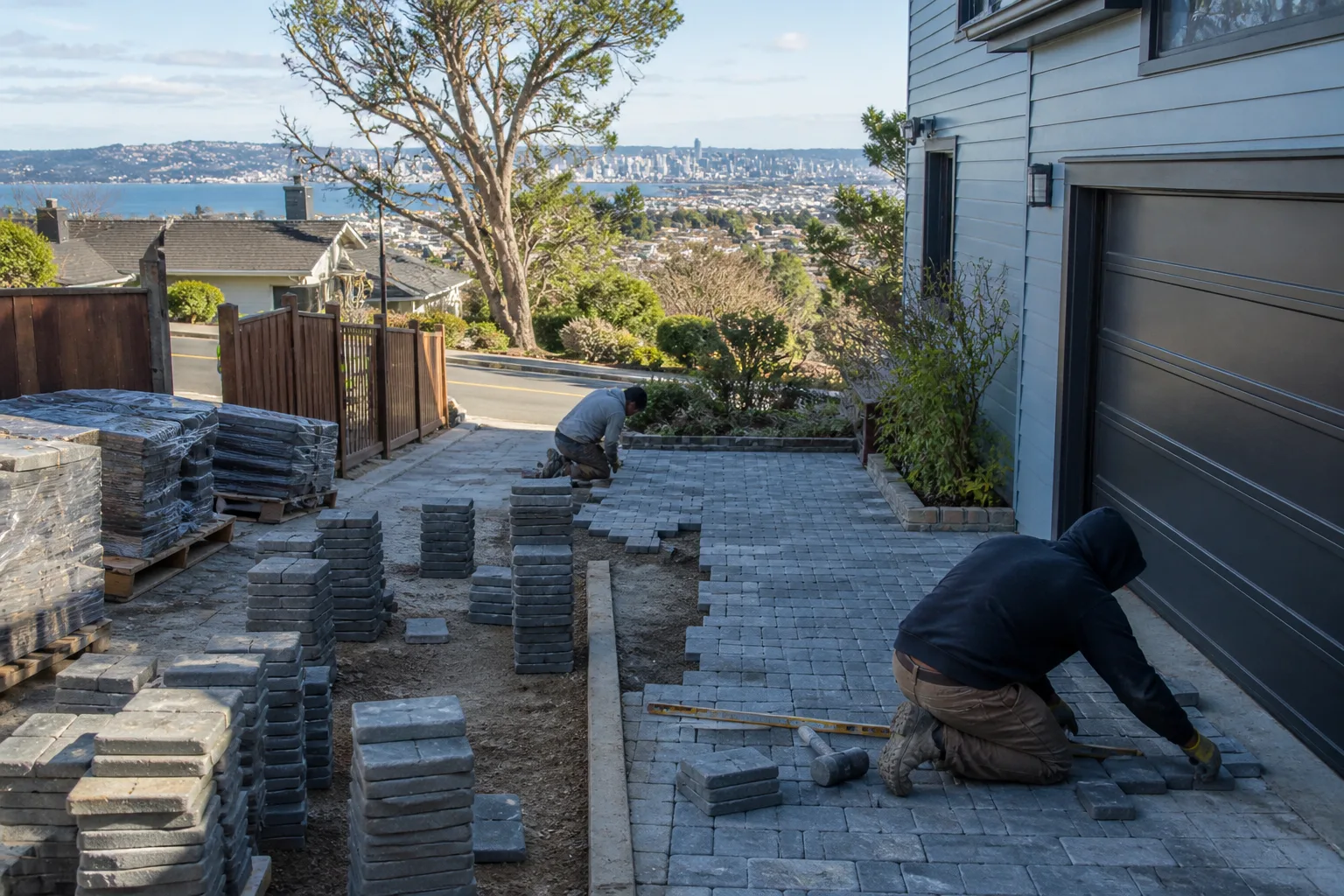
In most cases, not much – and a contractor who tells you otherwise is worth a second look. The honest same-day work is limited to temporary stabilization: removing a dangerously rocking paver, resetting a small section over an existing sound base, or blocking off a section that’s a trip hazard. Full section repairs and base work involve excavation, aggregate, compaction, and bedding, and that requires time and, depending on scope and location, city permits.
Permits are the part most homeowners don’t factor in. Driveway work that touches the sidewalk, the curb cut, or the public right-of-way generally runs through San Francisco Public Works rather than staying entirely on private property. A legitimate contractor will know this and tell you upfront that a same-day full repair isn’t realistic – while also being clear about what’s achievable on a short timeline. Under Clause 1 of the Haven Standard, Rowan writes the price down before anyone picks up a tool, and that hasn’t changed even when a homeowner wants it fast. A written price delivered today is honest. A promise of same-day completion rarely is.
If the failure involves the fence line or a shared boundary, our team handles that work under Fence Installation in San Francisco, and the two issues are often related.
Why does a written scope matter more when the pressure is on?
Verbal agreements fail fastest under time pressure. When a homeowner is worried about water reaching the slab and a contractor says “we’ll just reset the pavers and re-sand,” nobody writes anything down – and six months later the pavers fail again, with no record of who agreed to what. A written scope and a signed change-order policy are the two documents that hold up when the job goes sideways.
We’ve seen this play out repeatedly. We pulled a repair out of a driveway in Noe Valley last year where the previous contractor had verbally agreed to “fix the sand joint” – and only after excavation did it become clear the base was three inches short of aggregate over expanding clay. The right repair was a section rebuild, not a re-sand, and the homeowner had no paperwork to negotiate from. The change-order discipline exists for exactly that moment: no work proceeds on a change until the change is documented and signed. It sounds administrative. It’s the reason our projects finish within a few percent of the agreed price.
It also changes how honestly a quote is built. When you can compare a written scope line by line, the difference between a $400 re-sand and a $2,400 section rebuild makes sense. That’s why our Free Second Opinion on any written estimate exists: bring a competitor’s quote and we’ll review it in plain English, whether or not you hire us.
For larger work where the driveway, fence, and exterior all get addressed together, our team handles Home Additions & ADU in San Francisco as a separate scope, and the documentation discipline travels with it.
When to call a pro
If the affected area is bigger than one paver plus joints, or if water is heading toward your foundation, stop assessing and call a professional. Pavers are heavy, the excavation is real work, and the risk of a DIY fix making the base worse is high. Our technicians have up to 19 years of experience, are background-checked, and photograph every visit so you have a documented record of what was found and what was done. A paver problem near the wall is not the phase for guesswork.
Related services in San Francisco: Driveway & Pavers for full repair and install, Fence Installation for boundary and tree-related work, and Rowan Construction Group San Francisco for the full picture of what we do.
The Bottom Line
A lifted paver on a Sunday almost never needs a same-day dispatch. Measure the displacement, photograph everything with a ruler in frame, note where water runs, and write down the area in square feet. That prep protects you from an overpriced patch and lets any contractor quote honestly. Under the 365-Day Done Right Promise, our work is backed in writing for a full year, and every visit includes a photo record as a standard deliverable. If you’re in San Francisco and need help, Rowan Construction Group San Francisco offers free estimates – call (844) 797-6388. Worst case, you get a written number to compare.
One more thing: if a contractor won’t put their scope in writing before work starts, they’ve told you something. Believe it.
Frequently Asked Questions
Small section repairs typically run $400 to $1,200. Section rebuilds with base work run $1,800 to $4,500, and full driveway replacement is priced per square foot, often $14 to $26 per square foot depending on paver choice and base condition. Call (844) 797-6388 for an exact quote – estimates are free.
Only if water is entering the foundation or a paver is displaced more than 1/2 inch in a walking path. Otherwise, document the issue and schedule a weekday estimate. A rushed weekend repair often re-creates the same failure inside a year. Call (844) 797-6388 during business hours for a written scope.
No. Our written price is flat, with a written scope before work begins. If an unseen condition – like a root or short base – requires a change, no work proceeds on that change until a change order is signed. That’s the whole point of the policy: no surprises, no verbal agreements. Call (844) 797-6388 with your documentation and we’ll get you a real number.
Yes, when the scope requires them – particularly when work touches the public right-of-way or the curb cut. Permit requirements are scoped per project because the rules depend on what’s adjacent to public property. Bring your photos and measurements to the estimate and we’ll tell you plainly what needs a permit. Call (844) 797-6388 to schedule.
Written by the team at Rowan Construction Group San Francisco.
Need Construction Help?
Call Rowan Construction Group San Francisco - licensed & insured, here with fast after-hours help in San Francisco.
(844) 797-6388