Last updated November 17, 2026


Free written scope consultation - allowances, timeline, and change-order rules on paper before a single trade is scheduled
How Long Does Driveway & Pavers Take? Timelines and What to Expect
The paver-laying part of a standard 400 sq ft residential driveway takes one to two crew-days. The project itself usually runs three to six weeks from signed contract to first tire roll. That gap is where most homeowner schedules fall apart, because the timeline that matters isn’t the one on the YouTube video. It’s the permit queue at San Francisco’s Department of Public Works, the lead time on a special-order color from a Bay Area distributor, and the unglamorous 24 to 48 hours we deliberately lose between base compaction and bedding sand. This guide maps every phase with real durations so you can plan around the project instead of chasing it.
Quick Answer
Driveway paver installation in San Francisco takes roughly three to six weeks end to end, with one to two days of actual paver-laying. The remaining time is demolition, base compaction, a mandated cure hold, material delivery, and DPW permit processing. Simple replacements with in-stock materials and over-the-counter permits can close in under three weeks. Projects that trigger plan check or need special-order pavers routinely stretch to six or eight.
Styles & brands we work with
- Kitchen remodeling
- Bathroom remodeling
- Home additions & ADU
- Roofing
- Windows & doors
- Driveway & pavers
- Fence
Table of Contents
- Why the Paver-Laying Video Is Misleading
- The San Francisco Permit Queue: OTC vs. Plan Check
- Material Lead Times for Bay Area Pavers
- The Subbase Cure Window Nobody Talks About
- San Francisco Weather Holds and Fog Moisture
- The Phase-by-Phase Calendar Template
- What Compresses or Extends Each Phase
- Common Mistakes to Avoid
Why the Paver-Laying Video Is Misleading
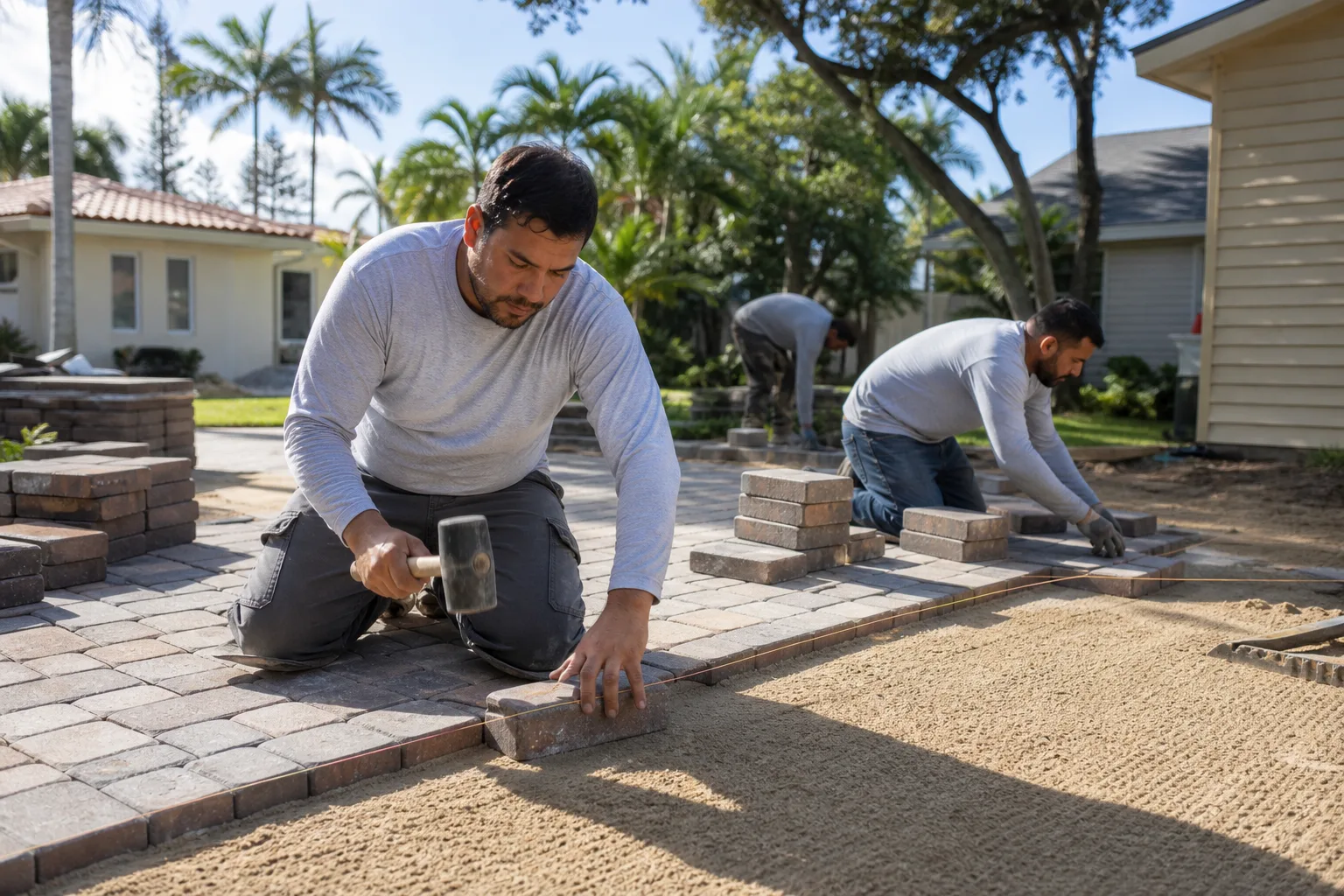
A crew of four can lay 400 sq ft of interlocking pavers in a day and a half. We’ve done it on flat Sunnyvale lots with pre-positioned material. The problem is that video clips out the six items that actually govern your calendar: sidewalk protection and demolition hauling, excavation depth, subbase delivery by dump truck, compaction in lifts, the cure hold, and the final joint sand and sealer pass. Each has its own clock.
Here in San Francisco, two of those items behave differently than they do in the suburbs. Excavation spoil has to be hauled in small trucks because many residential streets in the Sunset and Richmond can’t fit a full dump trailer without blocking the driveway apron. And a sidewalk-closure permit is required for any work that puts debris or equipment across the public right-of-way, which adds a step. On a project we scoped on a corner lot near Ocean Beach, the sidewalk permit alone added four business days before a shovel broke ground.
None of this argues against pavers. It argues for reading a timeline that accounts for what happens on the ground in San Francisco, not a curated montage.
The San Francisco Permit Queue: OTC vs. Plan Check
Almost every driveway project touches the public right-of-way, which puts it under DPW jurisdiction. Two application tracks exist, and the one your project falls into depends on the plan you submit.
Over-the-counter approvals (2 – 5 business days)
OTC is the fast lane. You qualify when the design is materially identical to what was there before: same footprint, same curb-cut width, no changes to the sidewalk grade, no alteration to drainage patterns, and the total slope under the city’s allowable threshold. Most straight replacement jobs in San Francisco fit here. On a recent Inner Parkside project, we had an OTC permit back in three business days.
Plan-check required (3 – 6 weeks)
You move to plan check when the project triggers any of the following:
- A widened curb cut or a new curb cut where none existed
- Regrading that changes how surface water leaves the property
- A driveway slope that exceeds the city’s maximum, which often arises on the steeper blocks in Noe Valley and Bernal Heights
- Work within the sidewalk, including new ramps, truncated domes, or utility relocations
- Any project requiring compliance with the residential stormwater performance standards
Plan check in San Francisco runs three to six weeks for a straightforward submission, longer if the reviewer issues corrections. Budget the upper end of that range on any plan-check project. The current DPW cycle times are posted publicly and worth pulling before you sign a contract, because whatever a contractor tells you about timing needs to square with the posted queue.
Material Lead Times for Bay Area Pavers
The single biggest driver of long timelines we’ve seen in San Francisco is material selection made late. Belgard and Techo-Bloc pavers come in both stock and special-order lines, and the two behave very differently in the Bay Area supply chain.
In-stock colors and formats (0 – 3 days)
Standard colors in the 60mm and 80mm thicknesses for driveways are commonly held at local distributors. Belgard’s standard line and Techo-Bloc’s Blu 60 collection in common colors are usually available for within-a-week delivery. We can lock those in for delivery the day the excavation is scheduled.
Special-order colors and formats (2 – 4 weeks)
Anything outside a distributor’s standing stock triggers a factory order. That includes custom color blends, imported European-format pavers, matching cap pieces for a specific existing installation, and premium textured finishes. On a Pacific Heights project last year, a homeowner selected a discontinued Belgard color that had to be produced and shipped from the East Coast, adding three weeks to the front end. We caught it at the second-opinion stage. It would have blown up the schedule otherwise.
The practical rule: lock your paver selection before the permit submits, not after. A permit doesn’t care which paver you chose. A delivery schedule does, and the two clocks run independently.
The Subbase Cure Window Nobody Talks About
This is the phase most contractors compress and most timelines ignore. After the base aggregate is compacted in lifts (typically two to three lifts of 4 to 6 inches each, vibratory-plated in sequence), you need to let it sit for 24 to 48 hours before screeding the bedding sand.
Why? Because freshly compacted aggregate continues to settle as moisture redistributes and small voids work their way closed. If you screed bedding sand over a base that’s still moving, the sand layer takes on uneven thickness, which shows up three months later as lippage, rocking pavers at the driveway apron, and joint sand that washes out in the first rain. Cutting the cure window saves a day and buys a callback a year later.
What you should see during this phase: nothing. The site looks idle. If a contractor isn’t building in a 24-to-48-hour hold, ask why. On San Francisco’s clay-heavy soils in areas like Diamond Heights and parts of the Sunset, we sometimes extend the hold to 72 hours when we’re excavating during a wet stretch, because the base holds more moisture than it can shed at typical compaction.
San Francisco Weather Holds and Fog Moisture
Standard timelines assume dry weather. San Francisco rarely delivers it. The marine layer is the specific risk.
When fog delays the job
Polymeric sand installation and penetrating sealer application both require relatively dry surfaces and low ambient humidity. Above roughly 80% relative humidity, polymeric sand doesn’t cure properly. It can stay plastic for days, haze the paver surface, or fail to harden at all in the joints. Sealer behaves similarly. If it goes down over a fog-damp surface, it can haze or flake.
Our rule in San Francisco: the polymeric sand and sealer window is a real scheduling item, not a formality. On the western side of the city, the fog tends to lift later and sit heavier than it does in the Mission or Potrero Hill. That means a Bayview project can finish a sealer pass on a Monday morning when a Sunset project needs to push to Wednesday afternoon. We build 2 to 3 weather contingency days into every San Francisco driveway schedule, and we plan the final phase for the late-morning to early-afternoon window when ambient humidity is lowest.
It’s also the reason we don’t schedule a sealer pass in the last two weeks of June or the first two of July if the site is within a mile of Ocean Beach. June Gloom is predictable enough to plan around, but not predictable enough to ignore.
The Phase-by-Phase Calendar Template
Here is a working calendar for a 400 sq ft San Francisco driveway with OTC permits and in-stock pavers. Adjust each phase using the notes below.
- Day 1 – 2: Demolition and excavation. Saw-cut the existing surface, break out concrete or asphalt, excavate to subbase depth (typically 8 to 12 inches for a residential driveway with paver plus base), and stage spoil for haul-away. Two crew-days on a standard flat driveway. Add a half day for sidewalk protection and permitting signage.
- Day 2 – 3: Base installation and compaction. Install aggregate in lifts, compacting each lift to refusal with a plate compactor. Verify grade and slope. One to two crew-days depending on subbase depth and site access.
- Day 3 – 5: Cure hold. Minimum 24 hours, 48 preferred. Extend to 72 on wet clay soil. No crew on site.
- Day 5 – 7: Paver laying and cutting. Screed bedding sand, lay pavers in the selected pattern, make all cuts with a wet saw along the apron, driveway edge, and any curve. One to two crew-days for 400 sq ft with a simple running bond; up to three crew-days for a herringbone or complex border detail.
- Day 7 – 9: Joint sand, compaction pass, and sealer. Sweep polymeric sand into joints, mist, compact, and apply sealer once the surface is dry. Weather-dependent, and possibly split over two days if the fog holds.
Add a two-to-four-week front-end pad for permit issuance and material lead time if either is non-stock or plan-check. That’s how you arrive at the realistic three-to-six-week total from the first paragraph.
What Compresses or Extends Each Phase
The template above is the middle case. Real projects land above or below depending on five variables.
What compresses the schedule
- Straight replacement with an identical footprint and OTC permit (saves 3 – 6 weeks of front-end)
- In-stock paver colors (saves 0 – 3 days)
- Compacted base on gravelly soil rather than clay (saves 0 – 1 day)
- Flat driveway with a simple bond pattern and no border detail (saves 1 – 2 crew-days)
- Direct street access without sidewalk staging (saves 1 – 2 permit days)
What extends it
- Plan-check submission, especially with a grading change (adds 3 – 6 weeks)
- Special-order paver line (adds 2 – 4 weeks)
- Steep block requiring engineered drainage (adds 1 – 2 weeks of design and a longer plan-check queue)
- Wet-stretch excavation on clay soil (adds 1 – 3 cure hold days)
- Fog accumulation on the western side of the city (adds 0 – 3 days on the sealer pass)
If you’re also planning work on other hardscape or exterior projects, our guide to Driveway & Pavers in San Francisco covers material selection and installation standards in more depth. Same-day coordination between driveway pavers and Fence Installation in San Francisco is a common request because the two share excavation and staging, and sequencing them together can save a full week of separate crew mobilization.
Common Mistakes to Avoid
- Signing the contract before paver selection. A timeline anchored to an unsigned material choice isn’t a timeline. Lock the color and format first, then build the calendar around it.
- Assuming all San Francisco driveways can go OTC. A slope change, a curb-cut width change, or a drainage modification kicks the project to plan check, and that’s a three-to-six-week swing nobody wants to discover in week four.
- Letting the crew skip the cure hold. Freshly compacted aggregate keeps moving under load. A paver laid on unset base will rock within a season. Ask the contractor what their hold looks like in writing.
- Scheduling polymeric sand on a fog-heavy morning. On the western side of San Francisco, above 80% humidity, polymeric sand can stay plastic for days. Build the sand and sealer pass for late-morning to early-afternoon, not the foggiest part of the day.
- Ordering special colors “once the permit pulls.” The permit queue and the material lead time are independent clocks. Run both from day one or you’ll pay for the gap.
- Not verifying sidewalk-staging access. Corner lots and narrow streets in the Sunset and Richmond often need a sidewalk-closure permit and staged staging, which adds 2 to 5 business days. Most quotes don’t mention it.
- Choosing a contractor who won’t put the timeline in writing. A verbal “about a week” is not a schedule. Under Clause 1 of the Haven Standard, our price is written before anyone picks up a tool, and the phase plan is written into the same document.
See the difference
 Before
 After
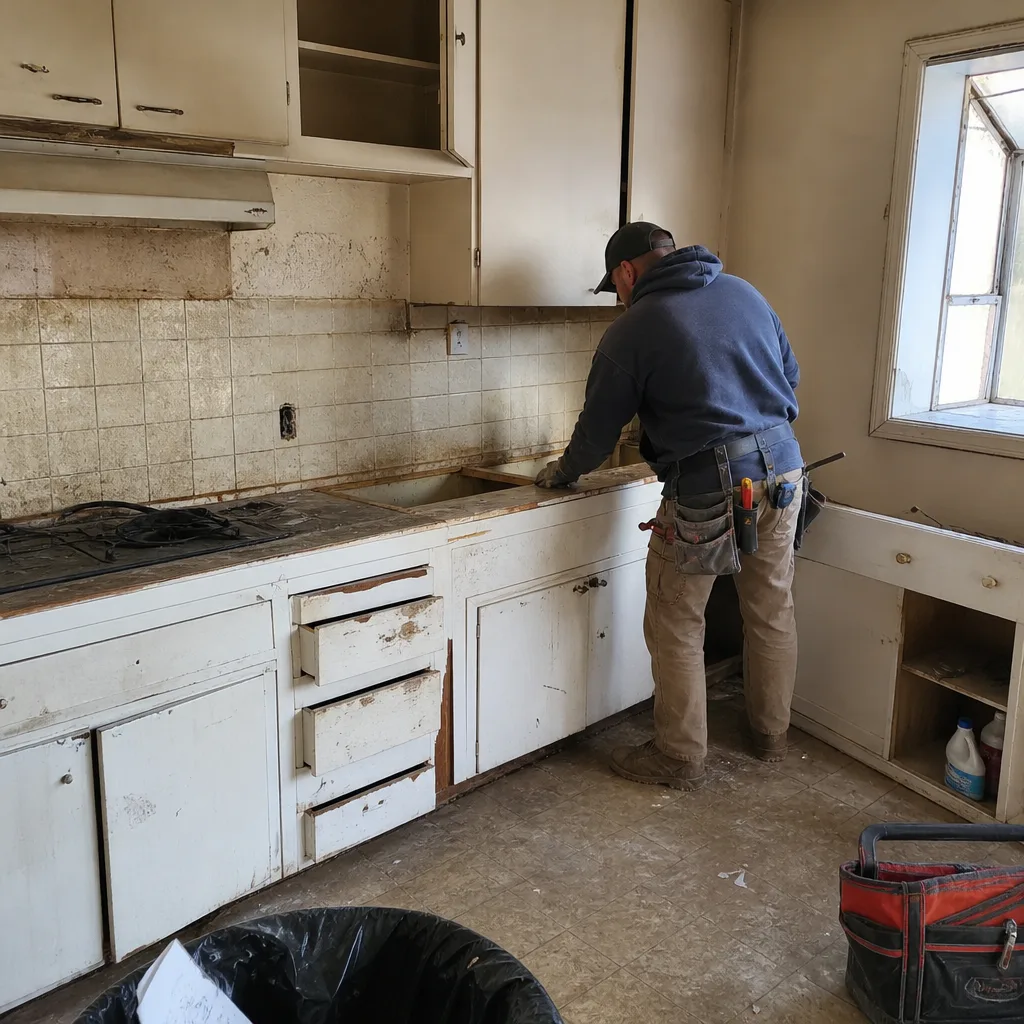 Before
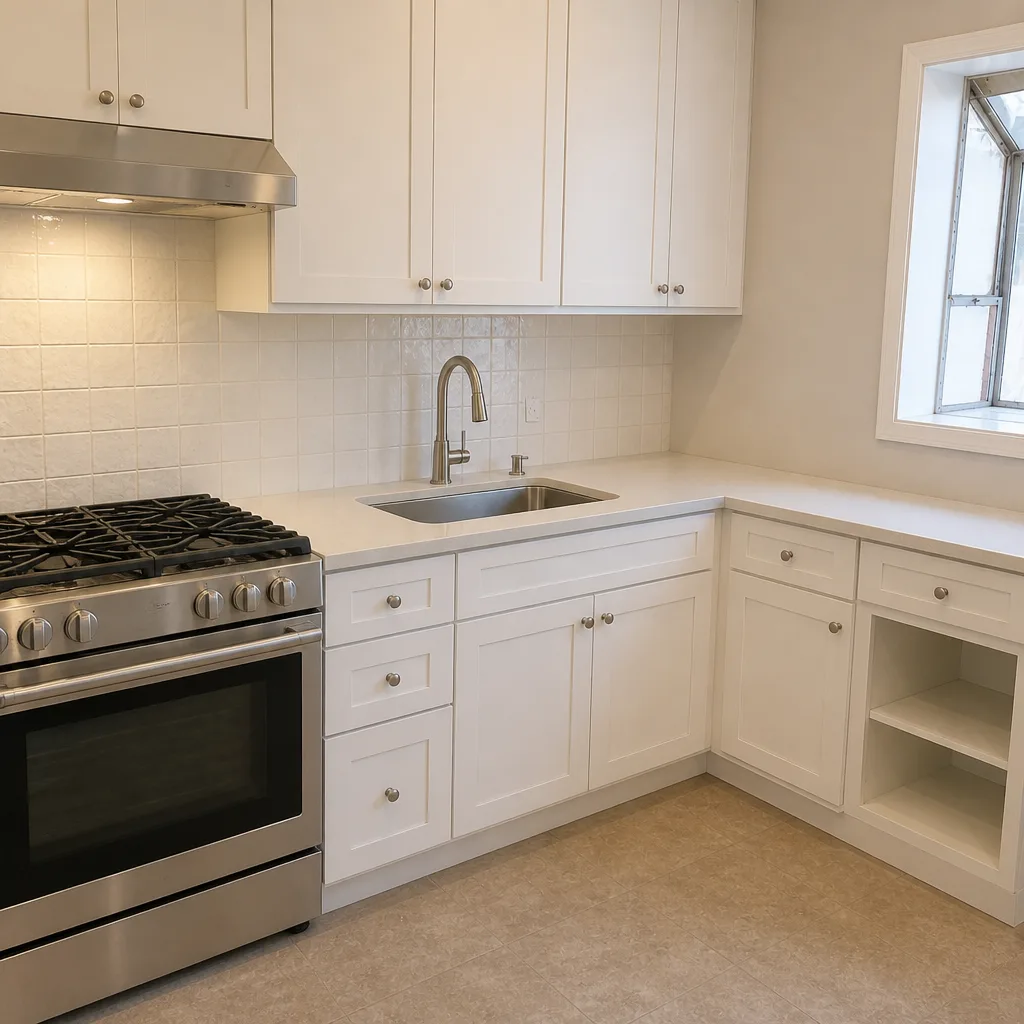 After
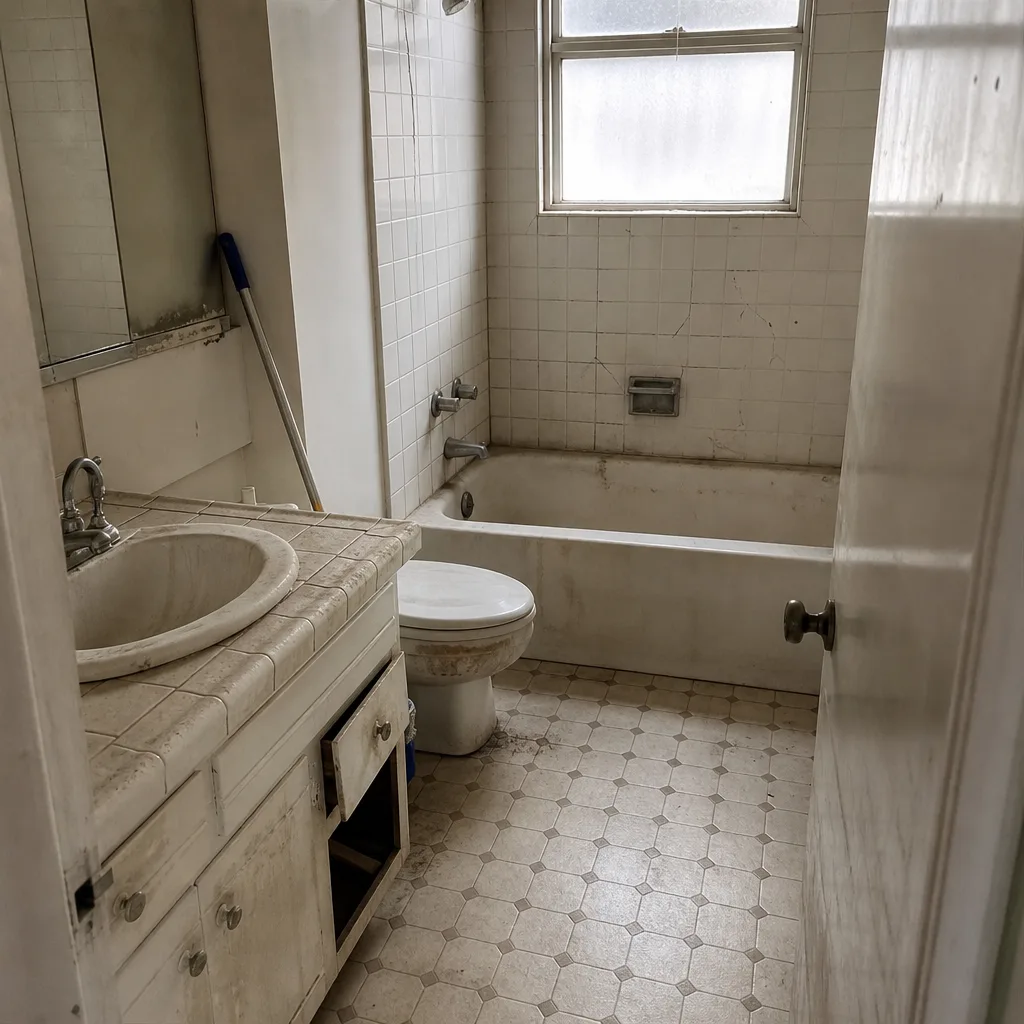 Before
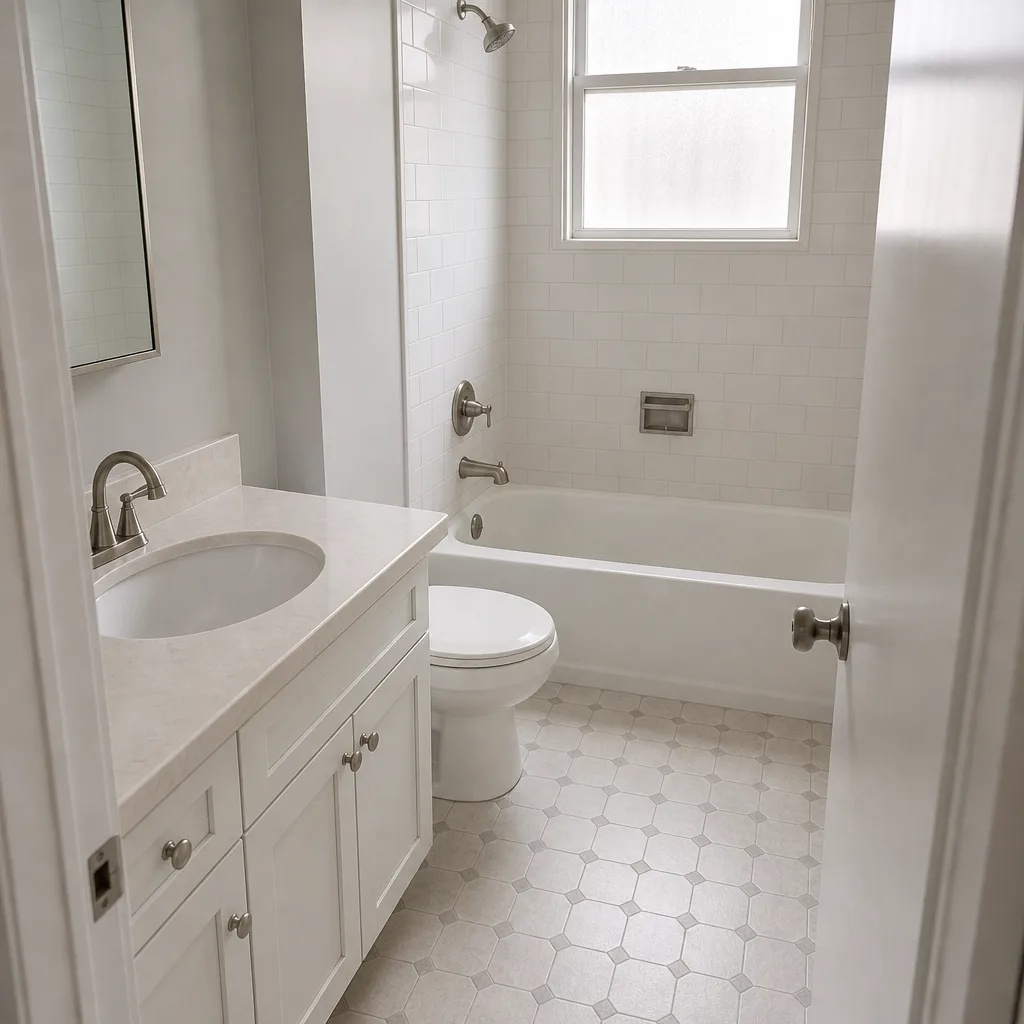 After
When to Call a Professional
If your project is a straight replacement on an unchanged footprint with in-stock pavers and flat grade, a licensed contractor can still compress the three-week version. If any of the following apply, do not attempt the project yourself: a slope change that triggers plan check, a curb cut alteration, drainage redesign, paver installation over clay-heavy SF soil, any project requiring sidewalk closure, or a polymeric sand and sealer pass that needs weather judgment. These are the situations where the wrong sequencing costs thousands to undo. Our technicians have up to 19 years of experience across hardscape and construction trades, and every job carries a written scope, a written price, and a written warranty. If you already have a quote from another contractor, we’ll review it line by line at no charge as a free second opinion. Rowan Construction Group San Francisco offers free estimates in San Francisco. Call (844) 797-6388 to schedule yours.
Frequently Asked Questions
Three to six weeks from signed contract to usable driveway for a standard residential project. The paver-laying itself is one to two crew-days; the rest is permit processing, material delivery, excavation, base compaction, the cure hold, and the sealer pass. Projects with plan-check permits or special-order pavers often run closer to six to eight weeks. Call (844) 797-6388 for a project-specific timeline, and estimates are free.
No, and any contractor who says otherwise is cutting corners on the base or skipping the cure hold. The layout and setting can be done in one day on a small driveway, but the full sequence – demolition, excavation, base compaction, cure, paver laying, joint sand, and sealer – cannot. Call us to see what the realistic phase plan looks like for your driveway.
Freshly compacted aggregate keeps settling as moisture redistributes and small voids close. Screeding bedding sand over a still-moving base produces uneven sand thickness, which shows up as rocking pavers and joint-sand washout within a year. We hold 24 hours minimum, 48 preferred, and up to 72 hours on wet clay soil. Ask any contractor what their hold is – and call (844) 797-6388 to see ours in writing.
Yes, specifically the polymeric sand and sealer pass. Above roughly 80% relative humidity, polymeric sand doesn’t cure properly and sealer can haze. On the western side of the city, near Ocean Beach and the Outer Sunset, we build 2 to 3 contingency days into the schedule and aim the sand and sealer pass for late morning. Estimates are free – call us for a schedule that accounts for fog.
Over-the-counter approvals for a straight replacement typically return in 2 to 5 business days. Plan-check submissions run 3 to 6 weeks and carry a higher fee because of the review cycle, plus possible corrections. Fees are set by DPW and quoted at submission. Call (844) 797-6388 and we’ll walk you through which track your project is on before the application goes in.
Not without a signed change order. Under Clause 1 of the Haven Standard, the written price comes before any work starts, and no work proceeds on a change until the change order is signed. That’s the discipline behind our track record of finishing within a few percent of the agreed cost across 4,000-plus jobs. Call (844) 797-6388 for a written quote.
The Bottom Line
Driveway paver installation in San Francisco takes three to six weeks end to end, and the paver-laying phase itself is one to two crew-days. The variables that actually move the calendar are the DPW permit track (OTC at 2 to 5 business days versus plan check at 3 to 6 weeks), paver lead time (stock versus special-order), the 24-to-48-hour subbase cure hold, and San Francisco fog timing on the polymeric sand and sealer pass. Lock the paver selection before the permit submits, confirm which permit track your project is on, and build a weather contingency into the final phase. Do those three things and the project stays on schedule. Skip them and the video timeline breaks in week two. For a written phase plan matched to your actual driveway, call Rowan Construction Group San Francisco at (844) 797-6388 – estimates are free.
Written by the team at Rowan Construction Group San Francisco.