Last updated November 17, 2026





Free written scope consultation - allowances, timeline, and change-order rules on paper before a single trade is scheduled
Bathroom Remodeling Warning Signs Every Homeowner Should Know
A bathroom floor tile that flexes underfoot by more than 1/8 inch typically means the cement board or plywood subfloor beneath it has absorbed enough moisture to delaminate. Retiling over that surface without replacing the subfloor produces a remodel that fails within 18 to 24 months, and the failure usually shows up as cracked grout lines and loose tiles along the traffic path. In San Francisco, where pre-1970 housing stock and cool, damp air combine to trap moisture behind tile and under floors, these signals show up in predictable places. This guide translates what a contractor actually measures during an inspection into tests you can run yourself, so you know the scope before you sign anything.
Quick Answer
The main warning signs before a bathroom remodel are a floor that flexes more than 1/8 inch, chalky white grout residue that keeps returning, a door that has begun to swing or stick on its own, discolored water at the tap, and an exhaust fan that runs but moves no air. Each of these points to moisture, settlement, or plumbing wear, not cosmetics, and each escalates the job from a surface refresh into a repair with a real price attached.
Styles & brands we work with
- Kitchen remodeling
- Bathroom remodeling
- Home additions & ADU
- Roofing
- Windows & doors
- Driveway & pavers
- Fence
Table of Contents
- The Flex Test: Reading Your Subfloor Without Tools
- The Grout-Chalk Test and What Efflorescence Tells You
- The Door-Swing Test for Structural Settlement
- San Francisco Warning Signs: Pipes, Plaster, and Stucco
- When a Cosmetic Remodel Becomes a Structural or Plumbing Job
- What a Pre-Construction Inspection Surfaces Before Demo
- Red Flags in Contractor Behavior During the Estimate
The Flex Test: Reading Your Subfloor Without Tools
Stand with your weight on the ball of one foot over the center of a floor tile, then shift your weight forward and back. If you feel the tile move under you at all, the subfloor layer beneath has lost its bond. A tile set on sound cement board over plywood does not give. This is the single most useful test a homeowner can run, and it costs nothing.
What causes the movement matters for the budget. In an older San Francisco bathroom, the sequence usually runs like this:
- Grout cracks along a grout line, letting shower or tub water past the surface.
- Water reaches the cement board, which wicks it toward the plywood below.
- The plywood swells, delaminates, and loses its compressive strength.
- The tile loses support and begins to flex and pop loose.
By the time you can feel the flex, the plywood has been wet long enough to lose structure. A $400 to $800 subfloor patch can sometimes resolve a small soft spot at the toilet flange. A full subfloor replacement across the bathroom footprint runs $1,800 to $3,200, and that number excludes new tile. We tell homeowners to check the floor at the toilet base and just outside the shower curb first, because those two spots account for most of the movement we find.
If you are already planning a larger remodel and wondering how a bathroom scope fits alongside structural work, our page on Home Additions & ADU in San Francisco covers how we sequence trades on overlapping projects.
The Grout-Chalk Test and What Efflorescence Tells You
Run a dry finger along a grout line and rub the residue between your thumb and forefinger. If it feels powdery and chalky, and if a white haze keeps coming back after you clean it, that is efflorescence. Efflorescence is the mineral salt left behind when water moves through mortar or tile backer board and evaporates at the surface. It is not dirt, and it does not mean the grout was mixed wrong. It means water is migrating.
The return rate is your evidence. A one-time white bloom after a cleaning is normal. A haze that reappears within two to four weeks on the same grout lines means moisture is actively traveling through the assembly, and cleaning will never fix it because the source is behind the tile.
Where the chalk appears changes the diagnosis:
- Floor grout near the shower: likely a failed shower pan or a gap at the curb where water escapes.
- Wall grout above the tub surround: likely missing waterproofing behind the tile, common in bathrooms finished before modern membrane standards.
- Grout around the toilet base: likely a failing wax ring or a supply line seeping behind the floor.
- Grout on an exterior wall: water entering from outside, not inside.
Waterproofing behind tile is a membrane: a sheet or liquid coating that keeps water out of the wall assembly. When it is missing or breached, the failure happens inside the wall, out of sight, until the chalk shows up. A contractor who tests for moisture with a meter during the estimate is confirming what that chalk already told you.
The Door-Swing Test for Structural Settlement
Open the bathroom door to about 45 degrees, let go, and watch. A door that swings on its own, or one that now sticks at the top where it never used to, is telling you the frame has moved out of square. This is the door-swing test, and it is the cheapest structural signal there is.
Movement in a door frame has three common causes in a bathroom. The first is normal seasonal wood movement, which self-corrects and is not a remodel concern. The second is a sagging floor joist, which usually shows up as a low spot in the floor plus a door that drags at the bottom of the strike side. The third is settlement of the house itself, which tends to reveal itself as cracks that radiate from the corners of door and window openings.
The distinction matters because a cosmetic remodel assumes the frame is stable. If the joist beneath the bathroom has sagged, retiling the floor puts new tile on a surface that is still moving, and the grout cracks within a year. We check the floor for level with a straightedge and a level during any pre-construction inspection, and we report the variance in plain inches so the homeowner can see what the tile setter would be working over.
Our crews have up to 19 years of experience in this trade, and the door-swing test is one of the first things they run on any older home before quoting the job.
San Francisco Warning Signs: Pipes, Plaster, and Stucco
San Francisco’s housing stock creates three warning signs you will not read about in a general remodeling guide, and all three show up in the neighborhoods where a lot of the bathroom work happens: the Sunset, the Richmond, Noe Valley, Bernal Heights, and the older Edwardian blocks of the Mission.
Galvanized supply pipe discoloration
If your home was built before 1970, there is a fair chance the original water supply lines are galvanized steel. Galvanized pipe corrodes from the inside out, so the pipe narrows over decades and the water pressure at the second-floor bathroom drops before the first-floor kitchen does. The tell is the water itself: a brownish or rust-tinged burst when you first turn on the hot tap, and a color that clears after a few seconds. That is near-end-of-life pipe. A bathroom remodel that opens a wall and finds galvanized lines is the moment to replace them, because you will never have easier access.
Soft plaster walls behind the shower
Edwardian and Victorian bathrooms often have plaster and lath walls rather than drywall. Plaster that has been wet goes soft and crumbly behind the surface. Press firmly on the wall beside the shower with your palm; if it gives slightly or sounds hollow compared to a wall across the room, the shower pan or the valve has been leaking into the assembly for a while. This is one of the most common demo surprises in San Francisco, and a pre-inspection finds it before the tile comes off.
Stucco swelling on the exterior wall
In San Francisco, a bathroom is often on an exterior wall clad in stucco over a wood frame. If the stucco on the outside of the bathroom looks bowed or you can see a bulge, water has been getting in behind it, usually through a failed window flashing or a hairline crack that the fog and rain have worked open. The swollen stucco is the outside half of a problem that shows up inside as soft wallboard. Both need repair before new tile goes on.
Exterior work on the same wall often pairs with a fence or paving project around the property line. Our Fence Installation in San Francisco page explains how we handle exterior moisture paths that run along a shared property edge.
When a Cosmetic Remodel Becomes a Structural or Plumbing Job
The thing homeowners fear most about a bathroom remodel is not the tile cost. It is the surprise change order that arrives mid-project. Here is how to see the escalation coming, and what each step costs in ranges so the number is not a shock.
| Finding | Repair | Typical range |
|---|---|---|
| Small soft spot at toilet flange | Subfloor patch | $400 – $800 |
| Delaminated plywood across footprint | Full subfloor replacement | $1,800 – $3,200 |
| Failed shower pan or membrane | Pan rebuild and waterproofing | $1,400 – $2,600 |
| Galvanized supply lines in wall | Partial to full supply repipe | $1,200 – $4,500 |
| Soft plaster and wet framing | Frame repair and wall rebuild | $900 – $2,200 |
| Sagging floor joist | Joist sistering or reinforcement | $1,500 – $3,800 |
These are the escalations a cosmetic remodel turns into when the warning signs were visible and ignored. In our experience, a homeowner who runs the flex test, the grout-chalk test, and the door-swing test before requesting a bid is in a much stronger position to compare quotes honestly, because they know which line items the contractor should have included. That is the whole point of putting the number in writing before anyone picks up a tool: the scope change is agreed before the demo, not discovered during it.
If your bathroom sits above a concrete drive or a paver apron that is also due for repair, timing both projects together can save on mobilization. See Driveway & Pavers in San Francisco for how that scope is quoted.
What a Pre-Construction Inspection Surfaces Before Demo
A pre-construction inspection is a walkthrough where a contractor checks the conditions behind the finish surfaces before any tile, wall, or fixture comes out. It is not the same as a general home inspection. It is a targeted look at the specific assemblies the remodel will touch, and it is the difference between a written price and a written guess.
Here is the sequence we follow on a bathroom pre-inspection in San Francisco:
- Run the flex test across the floor in a grid pattern and record any deflection over 1/8 inch.
- Take moisture readings at the toilet base, shower curb, and any wall adjoining the shower.
- Press-test plaster or drywall around the shower and note soft or hollow zones.
- Check water pressure and clarity at the shower and sink to flag galvanized line wear.
- Test the exhaust fan’s actual airflow, not just that it spins.
- Level-check the floor to record variance before tile is specified.
- Inspect the exterior wall or stucco for swelling or flashing failure at windows.
- Photograph every finding and attach the photos to the written scope.
Every visit includes that documented photo record as a standard deliverable, not an add-on. The homeowner leaves with evidence of what was found and what was done, which is exactly the record a homeowner wants on file if a dispute ever arises. If the pre-inspection turns up a subfloor issue, the price is written with the repair included, so there is no surprise change order once demo begins.
Red Flags in Contractor Behavior During the Estimate
The warning signs are not all in the bathroom. Some of them show up in the way a contractor quotes the job, and they predict the experience you will have once work starts.
- The bid omits subfloor inspection. A quote for a bathroom remodel that never mentions the condition of the substrate is a bid for the tile layer only. When the subfloor turns out to be wet, that omission becomes a change order priced at the worst possible moment.
- Change order language is open-ended. Wording like “additional moisture damage will be billed at prevailing rates” leaves the number undetermined. A fair contract states the price for moisture damage found, or states a cap.
- The scope is verbal only. If the scope lives in a conversation and not on paper, the contractor’s memory and yours will diverge. A written scope names the substrate, the waterproofing method, the fixtures, and the brands.
- No written price before the tool belt comes off the truck. “We’ll figure it out as we go” is the sentence that produces a five-figure surprise. A written price before any work starts should be a standard, not a request.
- The estimate skips the materials spec. A careful contractor names brands and specs: KraftMaid or Wellborn cabinets, Kohler or Toto fixtures, Cambria or Caesarstone countertops. A quote that names no brand is a quote for an unknown material at a known price.
- The crew shows up without a verification record. Background-checked, uniformed technicians should be the baseline. Ask how crews are verified before they arrive.
Bring any written estimate you have received and Rowan will review it line by line at no charge as part of our Free Second Opinion. That review often turns up a missing substrate line or a scope description that would have produced an open-ended change order.
Common Mistakes to Avoid
- Retiling over a soft subfloor because the tile looks fine. The tile is the top of the sandwich. If the bottom is wet, new tile on top of it cracks in 18 to 24 months, and you pay twice.
- Treating chalky grout as a cleaning problem. Efflorescence that returns within two to four weeks means water is moving behind the tile. Scrubbing it does not stop the water, and neither does a fresh coat of sealer over the top.
- Ignoring a door that swings by itself. A door frame out of square is a structural note, not an old-house quirk, and it should be explained in the written scope before tile is specified over a moving floor.
- Assuming the galvanized pipes in a pre-1970 San Francisco home will last through the remodel. Opening a wall is the easiest moment to replace them. Waiting means opening the wall again.
- Accepting a bid that never mentions the subfloor or the waterproofing method. Those two line items are where the real cost of a bathroom remodel lives, and a bid that omits them is incomplete by design.
- Skipping the pre-construction inspection to save a few days. The time the inspection takes is the time a mid-project change order would have added, and the inspection surfaces the number before the contract is signed, not after.
- Letting work start on a change without a signed change order. The signed change order is the whole reason a project stays within a few percent of the agreed price. Do not let that discipline slide, even on a small repair.
See the difference
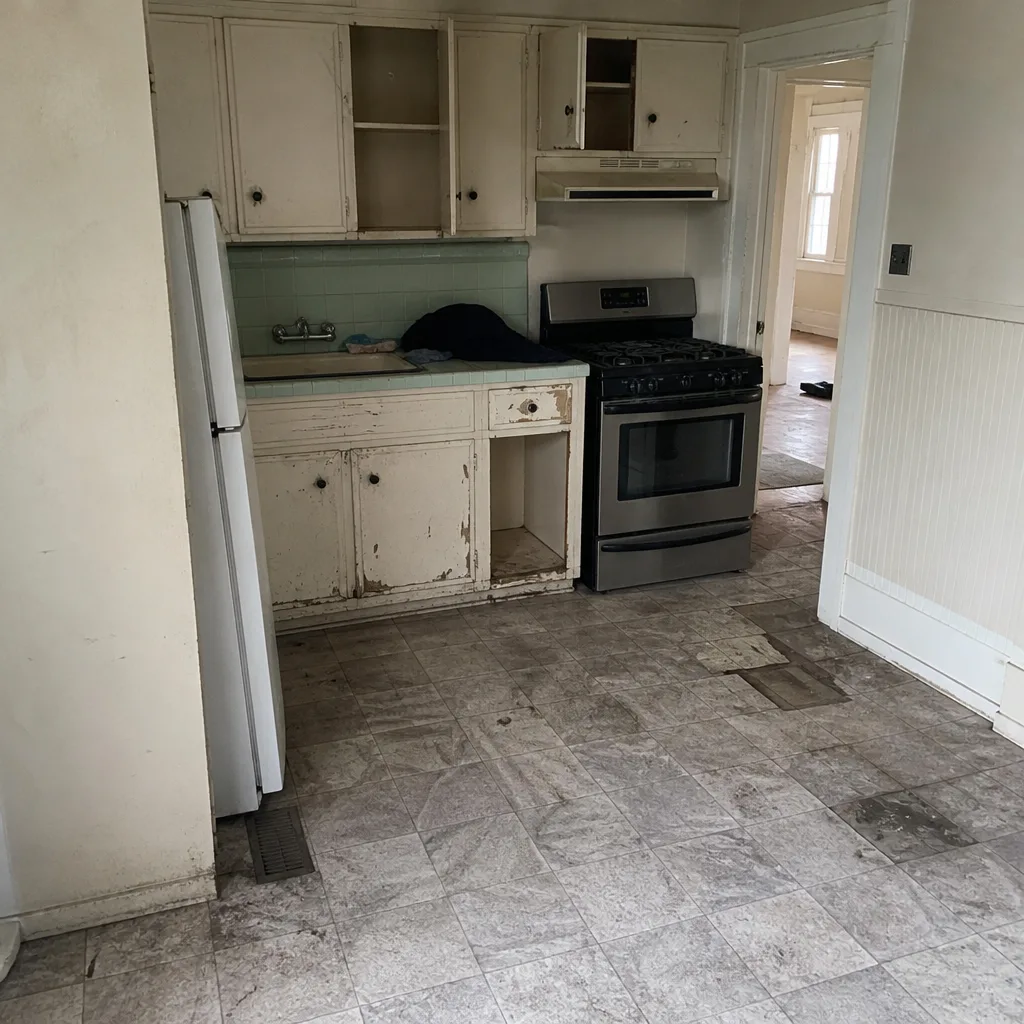 Before
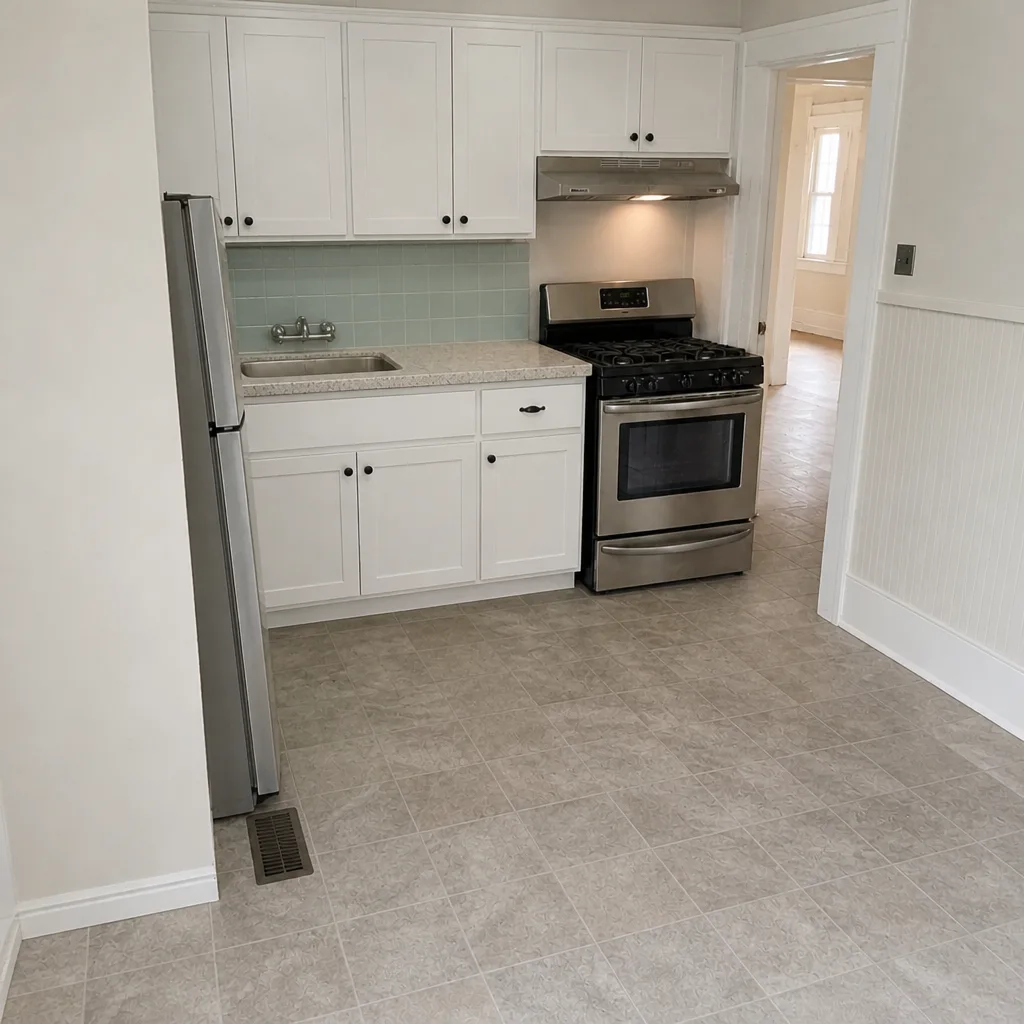 After
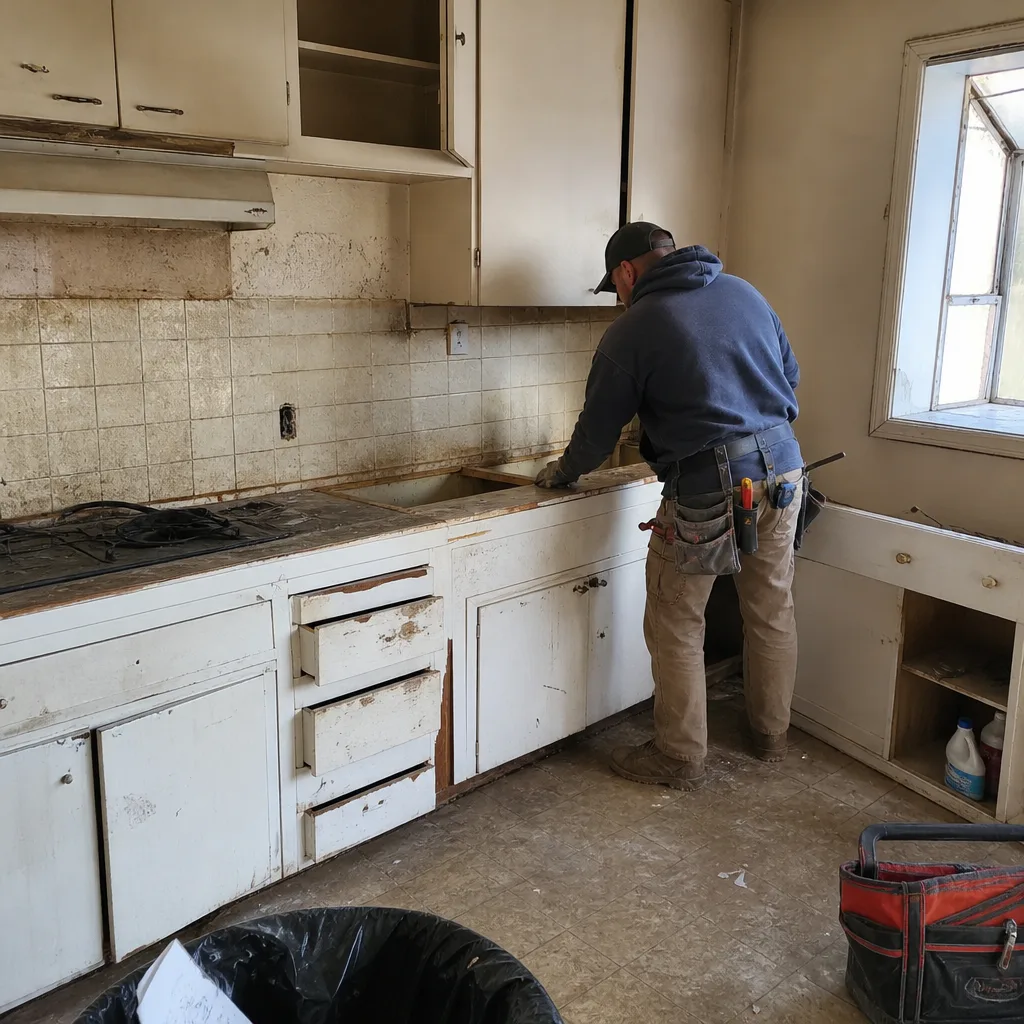 Before
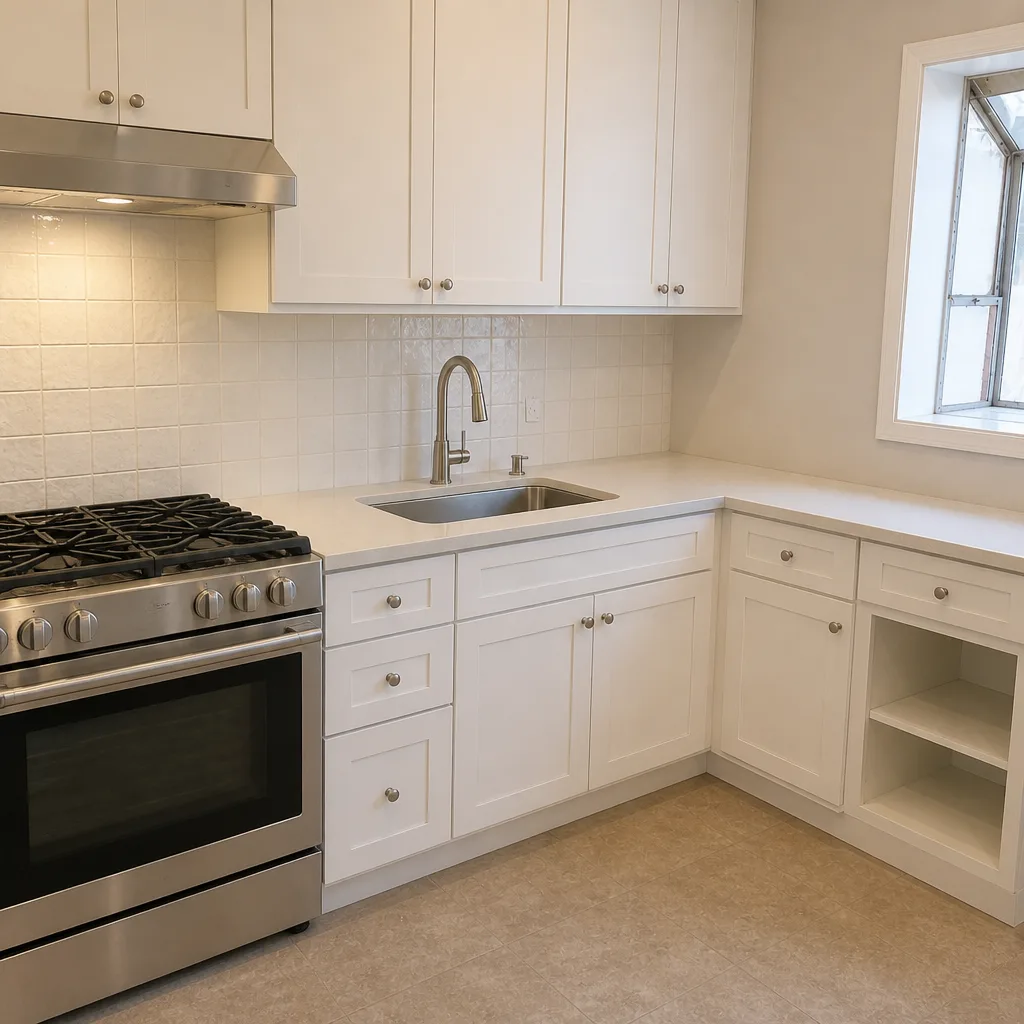 After
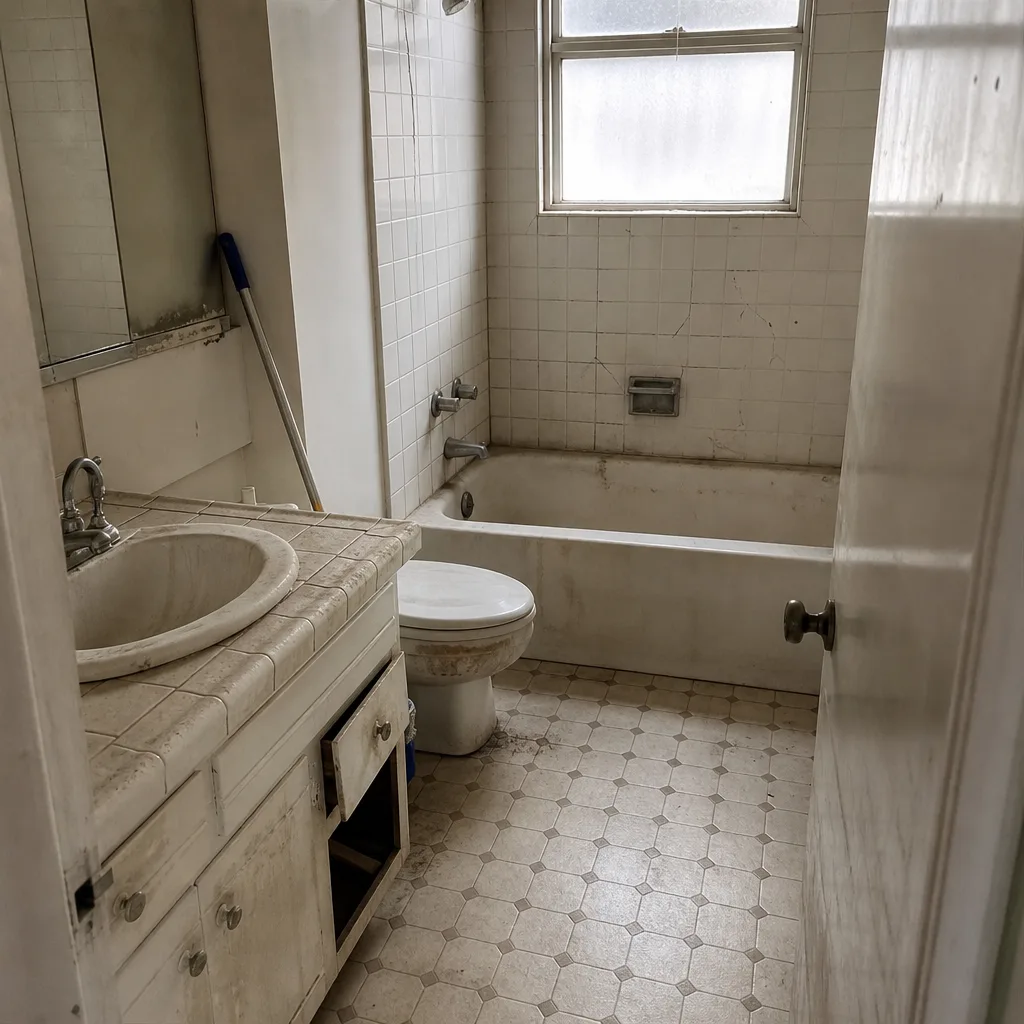 Before
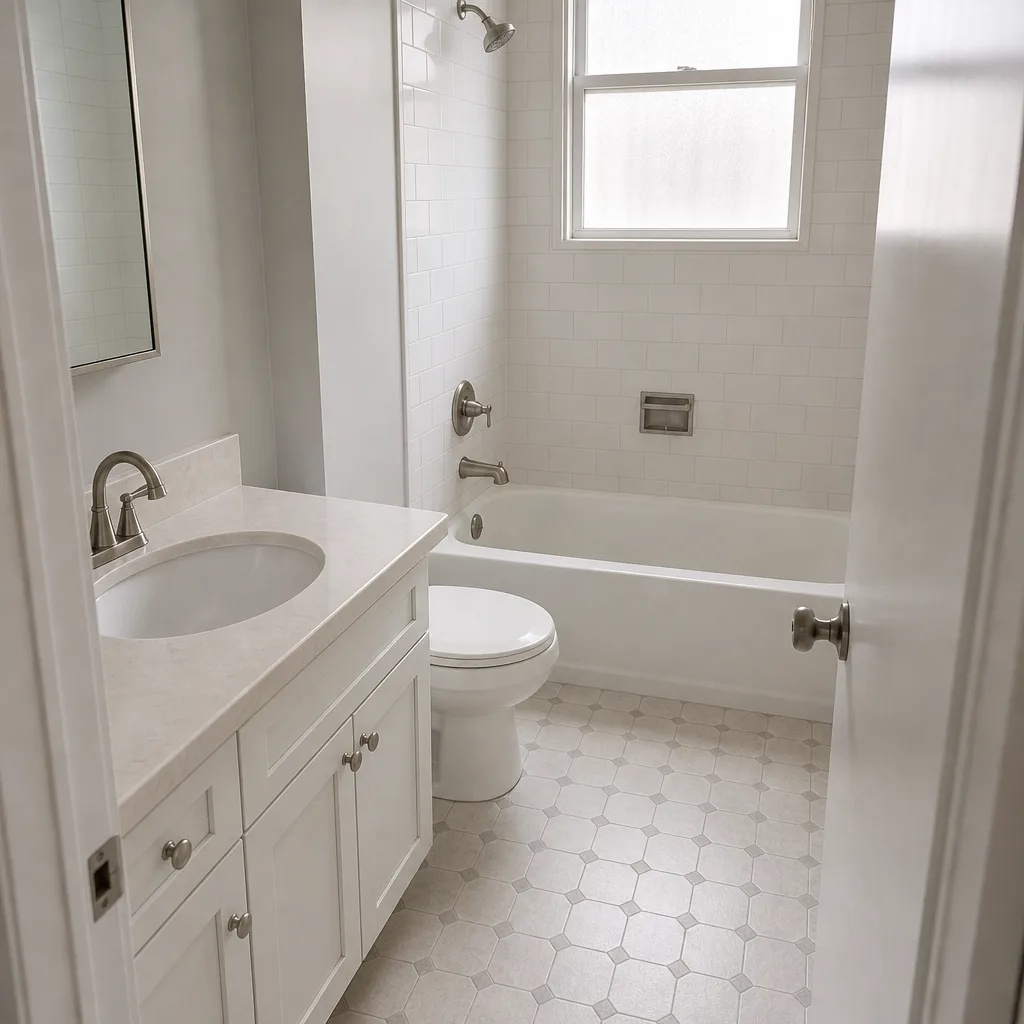 After
When to Call a Professional
Some of these tests are yours to run. Some are not. Call a professional when the flex test shows movement over 1/8 inch anywhere on the floor, when efflorescence returns on the same grout lines within a month of cleaning, when the door-swing test shows a frame out of square, or when the water at the tap runs brown for more than a second or two. Call a professional when plaster around the shower feels soft, and call one when the stucco on the exterior bathroom wall bulges. These are the conditions that put a bathroom remodel into the structural and plumbing budget rather than the tile budget, and they are the ones a trained eye can price accurately. Rowan Construction Group San Francisco offers free estimates in San Francisco. Call (844) 797-6388 to schedule yours, and bring a competitor’s written quote if you have one for a no-charge second opinion.
Frequently Asked Questions
A floor tile that flexes more than 1/8 inch underfoot is the single biggest warning sign, because it means the subfloor beneath has lost structural integrity and a simple retile will fail. The flex test takes seconds and does not require tools. If you feel movement, plan for a subfloor repair of $400 to $800 at a small spot, or $1,800 to $3,200 for a full replacement. Call (844) 797-6388 for an exact quote before you sign anything.
Rub a dry finger along the grout and check whether the residue feels chalky, then see if the white haze returns within two to four weeks after cleaning. Efflorescence comes back because water is still moving through the tile assembly and evaporating at the surface. Ordinary discoloration from soap or dirt stays in the tile’s pores but does not bloom back as a mineral haze. If it keeps returning, the moisture source needs a professional look; call (844) 797-6388 for a free estimate so you know the scope before demo.
Brownish water that clears after a few seconds in a pre-1970 home usually points to galvanized steel supply lines that have corroded to near end of life. The pipe corrodes from the inside, so pressure drops and the water picks up rust. A bathroom remodel is the best moment to replace those lines because the wall is already open. Call (844) 797-6388 to have it inspected and priced in the written quote.
Under the Rowan standard, no work proceeds on a change until a change order is signed, and the price for the change is written before the work continues. That discipline has kept projects within a few percent of the agreed cost across more than 4,000 jobs. A pre-construction inspection is what makes it possible, because the subfloor, plumbing, and wall conditions are priced before demo rather than discovered during it. Call (844) 797-6388 to schedule a free estimate with a written scope.
A bathroom remodel that moves fixtures, changes plumbing, or alters framing generally requires a permit, and pulling it before work starts is part of the written scope. The permit is a document, not a courtesy; it is what makes the inspection record possible and what protects the resale value of the home. Ask any contractor to name the permit line in the written scope. Call (844) 797-6388 to discuss what your San Francisco remodel will require.
The Rowan pre-construction inspection is part of the free estimate process, and it includes the flex test, moisture readings at the toilet base and shower curb, a press-test of the surrounding walls, a pressure and clarity check on supply lines, an exhaust fan airflow test, a floor level check, and an exterior stucco and flashing review. Every finding is photographed and attached to the written scope. Call (844) 797-6388 to book it; the estimate is free and the photo record is yours to keep.
The Bottom Line
The warning signs before a bathroom remodel are measurable, and most of them cost nothing to check. A floor that flexes more than 1/8 inch, chalky grout that keeps coming back, a door that swings on its own, brown water at the tap, and soft plaster around the shower are the signals that turn a cosmetic refresh into a structural or plumbing budget. Catch them early and the number is written into the scope, not discovered in a change order. That is the whole reason a written price before work starts matters: it is the homeowner’s proof that the scope was understood. Rowan Construction Group writes the number, documents the findings, and stands behind the work under the 365-Day Done Right Promise. For a San Francisco bathroom, start with Rowan Construction Group San Francisco home, then call (844) 797-6388 for a free estimate and a line-by-line second opinion on any quote you already have.
Written by the team at Rowan Construction Group San Francisco.