Last updated November 17, 2026






Free written scope consultation - allowances, timeline, and change-order rules on paper before a single trade is scheduled
Driveway & Pavers Warning Signs Every Homeowner Should Know
A single paver that rocks underfoot isn’t a loose paver problem. It’s a bedding sand migration problem, and if three or more pavers in a cluster rock, the subbase beneath them has likely lost contact with the aggregate layer and you have a base failure in progress. That distinction is the difference between a $150 spot fix and a $4,000 partial rebuild, and most homeowners miss it because the surface still looks fine. This guide walks you through the specific signals we check on driveways across San Francisco, separating cosmetic wear from structural failure, so you know what you’re looking at before you call anyone.
Quick Answer
The warning signs of driveway paver problems that matter most are rocking paver clusters (more than 5% of the surface area), directional joint sand loss, edge restraint displacement of a quarter inch or more, and differential settlement between adjacent sections. Rust staining along a straight line, oil-dark staining that follows joint patterns, and efflorescence concentrated in one zone all point to water moving through the base rather than off it. Surface cracks and uniform settling are usually benign. Anything that suggests the base has lost contact with the pavers needs investigation, not a cosmetic patch.
Styles & brands we work with
- Kitchen remodeling
- Bathroom remodeling
- Home additions & ADU
- Roofing
- Windows & doors
- Driveway & pavers
- Fence
Table of Contents
- The Rocking Pavers Test: How to Walk Your Driveway Systematically
- What Joint Sand Loss Patterns Tell You About Drainage
- Edge Restraint Displacement: The Quarter-Inch That Compounds
- Differential Settlement vs. Uniform Settlement
- Staining Patterns That Point Underground
- Efflorescence: Concentrated vs. Uniform
- When Surface Wear Becomes Base Failure
- Common Mistakes to Avoid
The Rocking Pavers Test: How to Walk Your Driveway Systematically
A paver that rocks when you step on one corner is telling you the bedding sand has migrated away from that spot and the paver is now spanning a void. One is routine. A cluster of three or more in the same area means the sand layer has shifted enough that the subbase aggregate is no longer distributing load evenly, and the pavers sitting over that void will crack under vehicle weight within a season or two.
Here’s how we walk a driveway to measure it. This takes about ten minutes and needs nothing but a pair of shoes and a piece of chalk.
- Divide the driveway into a grid of roughly 4-foot squares. On a standard two-car driveway that’s about 12 to 16 squares.
- Stand on each square and shift your weight from heel to toe, then side to side. Note any paver that moves vertically or rocks on an axis.
- Mark each rocking paver with chalk. Don’t skip pavers that only rock slightly; those are the ones that fail first.
- Count the marked pavers and measure the area they occupy. If rocking pavers cover more than 5% of the total surface, you have a base problem, not a maintenance item.
- Look at where the clusters sit. Rocking near the street edge points to water infiltration at the apron. Rocking in the center points to subbase compaction that wasn’t adequate at install.
In San Francisco, we see this most often on driveways installed before 2010 in neighborhoods like Noe Valley and the Sunset, where the original base was compacted to older standards. The city’s fog belt keeps the base damp for months at a time, and damp aggregate loses load-bearing capacity faster than dry aggregate. A driveway that would last 20 years in Sacramento can show clusters at year 12 here.
What Joint Sand Loss Patterns Tell You About Drainage
Joint sand is the material packed between pavers that locks them together and channels surface water off the driveway. When it washes out evenly across the whole surface, that’s normal wear and a bag of polymeric sand will fix it. When it washes out in a linear pattern, running from the house toward the street, that’s a slope problem, and the water is running under the pavers rather than over them.
Stand at the top of the driveway and look down at the joint lines in raking light. What you’re looking for:
- Linear sand loss toward the street: The drainage slope is likely under 1%. Paver driveways need a minimum 1% slope to shed water, and we’ve measured San Francisco driveways at half that. Water pools at the joints, wicks into the bedding sand, and carries it out with every rain event.
- Sand loss concentrated at the low point: This points to a clogged or undersized drainage channel. Water backs up and finds the path of least resistance, which is usually a joint.
- Sand loss along the house edge: Water is running off the roof or a downspout and hitting the pavers directly. A San Francisco downspout that discharges within 3 feet of the driveway will wash out the joint sand in a single wet season.
- Sand loss in a random pattern: Usually just age and traffic. Refill and check again in six months.
Sand loss that points in a direction is the single most overlooked signal on a paver driveway. The surface looks intact, but the base is being slowly flushed out from underneath. Our Driveway & Pavers in San Francisco crews see this pattern on nearly every driveway we’re called out to inspect in the Outer Richmond, where the grade often runs toward the street at less than ideal pitch.
Edge Restraint Displacement: The Quarter-Inch That Compounds
Edge restraint is the aluminum, steel, or concrete border that holds the outermost course of pavers in place. It’s the reason the interior field stays tight, and it’s the first component to fail when water gets under the driveway. A quarter inch of outward movement in the border course is the threshold where we stop calling it settling and start calling it displacement.
Here’s why a quarter inch matters. The pavers in the interior field are held in compression by the edge restraint. Once the restraint moves, that compression releases, and the interior pavers begin to spread. The rate of spread accelerates because each millimeter of movement opens a wider gap for water to enter, which further undermines the restraint. A quarter inch discovered in spring becomes three-quarters of an inch by fall if nothing spiked it back.
Check the border by laying a straightedge along the outside edge of the driveway and looking for gaps. You’re also looking for soil that has washed out from behind the restraint, which you’ll see as a trench along the backside of the aluminum or steel. In San Francisco, the steep grade of many driveways means gravity loads the downhill edge restraint harder, and the downhill border is usually where the first shift appears.
On properties where driveway pavers tie into a new Fence Installation in San Francisco, the edge restraint often doubles as the fence footing, and displacement on the driveway side can telegraph into fence post movement. Both should be inspected together.
Differential Settlement vs. Uniform Settlement
Settlement is when the entire paver surface sits lower than it did at install. All driveways settle a little. Uniform settlement, where the whole surface drops by the same amount, is almost always benign. Differential settlement, where one section sits lower than the section next to it, is the signal that the base under that section has failed.
The practical test is to lay a 6-foot level on the driveway crosswise. If the bubble shows a consistent slope across the length of the level, you have uniform settlement. If the level sits flat on one section and gaps under the other, you have differential settlement, and the section with the gap is sitting on a void.
Differential settlement usually starts as a low spot you notice when it puddles after rain. Left alone, the low spot collects water, the water further compacts the failed base, and the dip deepens. On a San Francisco driveway with a 15% slope, differential settlement of half an inch will change where water sheds and often sends it toward the garage door sill. That’s how a driveway problem becomes a garage water intrusion problem. Our crews in Home Additions & ADU in San Francisco regularly find driveway settlement that was the original source of a flooded garage in a converted ADU, and the driveway fix comes first.
Uniform settlement over 3/4 inch across the entire driveway is worth checking too, but it usually means the subgrade was compacted to a uniform standard and simply compressed equally. It’s not urgent.
Staining Patterns That Point Underground
The stains on a paver driveway are a readout of what’s happening below the surface. Most homeowners wipe them down and forget about them. We read them.
- Rust stains along a straight line: This is usually a steel edge restraint or rebar in the concrete apron corroding beneath the surface. The stain appears at the surface because the corrosion products are traveling up through the joint. A rust line across a driveway is an anchor point for the corrosion investigation.
- Oil-dark staining that follows joint lines: Water is wicking up through the base and depositing minerals and organic material at the surface. The staining pattern traces the joint lines because joints are where the moisture escapes. This almost always means the base is saturated and the drainage is not working.
- Random oil stains at traffic points: These are almost always household spills or vehicle drips. Clean and let them be.
- Staining concentrated at the perimeter: Water is entering at the edge restraint and traveling along the base layer, surfacing at the perimeter joints. The edge is failing.
On a San Francisco driveway, added context matters: basement-level garages are common, and dampness wicking up through the driveway base can contribute to moisture in the garage. If you see oil-dark joint-line staining, look at the base of the garage wall for efflorescence or paint bubbling. Both are signs the driveway drainage and the garage waterproofing share a problem.
Efflorescence: Concentrated vs. Uniform
Efflorescence is the white, chalky powder that appears on pavers when water moves through the material and evaporates at the surface, leaving mineral salts behind. The pattern matters more than the presence. A faint dusting of white spread across the entire driveway is normal and means the pavers are drying evenly. A patch of heavy white in one zone is a lens into where water is concentrated.
Concentrated efflorescence, especially when it forms in a specific shape or tracks a joint line, tells you the base below that zone is holding moisture longer than the surrounding base. The cause is usually poor drainage, a clogged subbase fabric layer, or a localized failure of the aggregate compaction. The pavers themselves are fine. The base is not.
In San Francisco, spring fog creates ideal conditions for efflorescence on the north-facing driveways, and we see concentrated patches on those driveways far more than on the south-facing ones. That said, if a north-facing driveway you’ve owned for years suddenly develops a bright white patch on one section while the rest is clean, that’s the base telling you something changed.
When Surface Wear Becomes Base Failure
The simplest way to classify what you’re looking at is to answer two questions. First, is the surface damage cosmetic or functional? Chips, small cracks, and faded color are cosmetic. Second, is the base underneath still doing its job? You can answer that by looking for the four indicators above: rocking clusters, directional sand loss, edge displacement, differential settlement.
If any two of the four indicators are present, you’re in base failure territory, and the correct repair is to remove the affected pavers, re-establish the subbase and bedding sand, and reinstall. If only one is present and it’s early, a targeted fix may hold. Our crews install with Belgard and Techo-Bloc pavers because both brands hold dimensions tightly enough that a spot rebuild sits flush with the existing field, which is not true of all paver brands on the market.
Base failure that’s caught early, when rocking covers under 5% of the surface and edge displacement is under a quarter inch, is typically a repair job. Base failure discovered after a full season of water intrusion often needs a rebuilt section, and the difference in cost between the two is significant. If you’re comparing this against a broader project, our Rowan Construction Group San Francisco home page gives the full picture on how we scope combined work.
Common Mistakes to Avoid
- Treating a rocking paver as a one-paver problem. A single rocking paver is usually a spot fix, but if you fix it without investigating the base condition around it, the same void will fail the neighbor pavers within one season. Pull up the surrounding three pavers and look at the bedding sand condition before you compact and replace.
- Filling joint sand without diagnosing the loss pattern. Adding polymeric sand over a directional runoff problem buys you six months at most. Diagnose the drainage first, correct the slope or channel, then refill.
- Ignoring a quarter-inch of edge movement. San Francisco driveways with steep grades displace the downhill edge restraint much faster than flat grades. A quarter inch in the fall becomes an inch by spring, and the whole field spreads with it.
- Confusing differential settlement with normal settling. Patching the low spot with sand or topping compound without addressing the failed base underneath hides the problem and concentrates it. It also makes the eventual rebuild harder because the top layer has to be removed and disposed of separately.
- Washing the driveway with a pressure washer at high PSI. High-pressure washing strips the joint sand and accelerates the water intrusion you’re trying to stop. On a San Francisco driveway in the fog belt, a 1,500 PSI pass at the wrong angle can undo years of joint sand in one afternoon.
- Skipping the permit step on a rebuild. Any paver driveway rebuild that changes the grade or the drainage plan may require a San Francisco Department of Building Inspection permit, particularly when it connects to a garage or affects stormwater flow to the public right-of-way. Undocumented driveway work can complicate a future home sale.
- Hiring based on a phone estimate without inspecting the base. A contractor who quotes a paver repair without pulling at least one paver to inspect the bedding sand is guessing. Ask for a written price after an inspection, not before.
See the difference
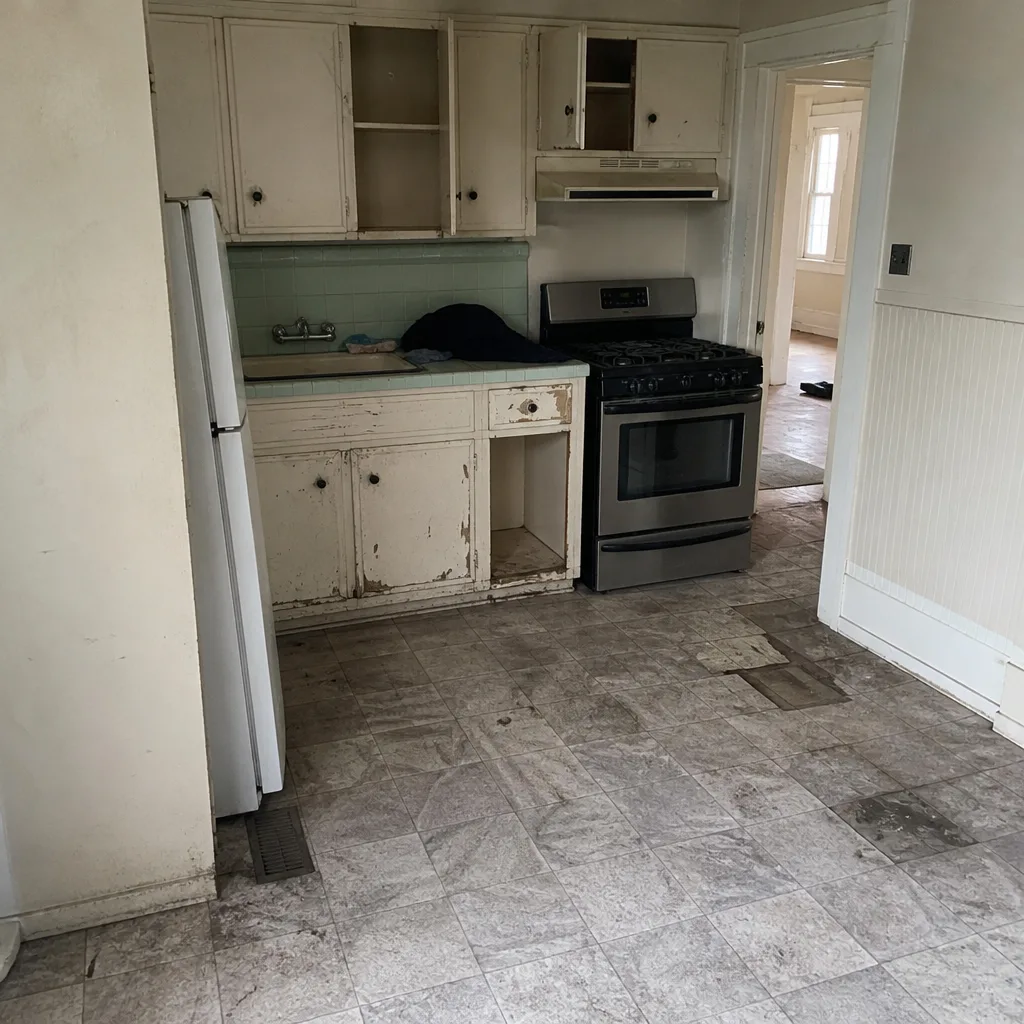 Before
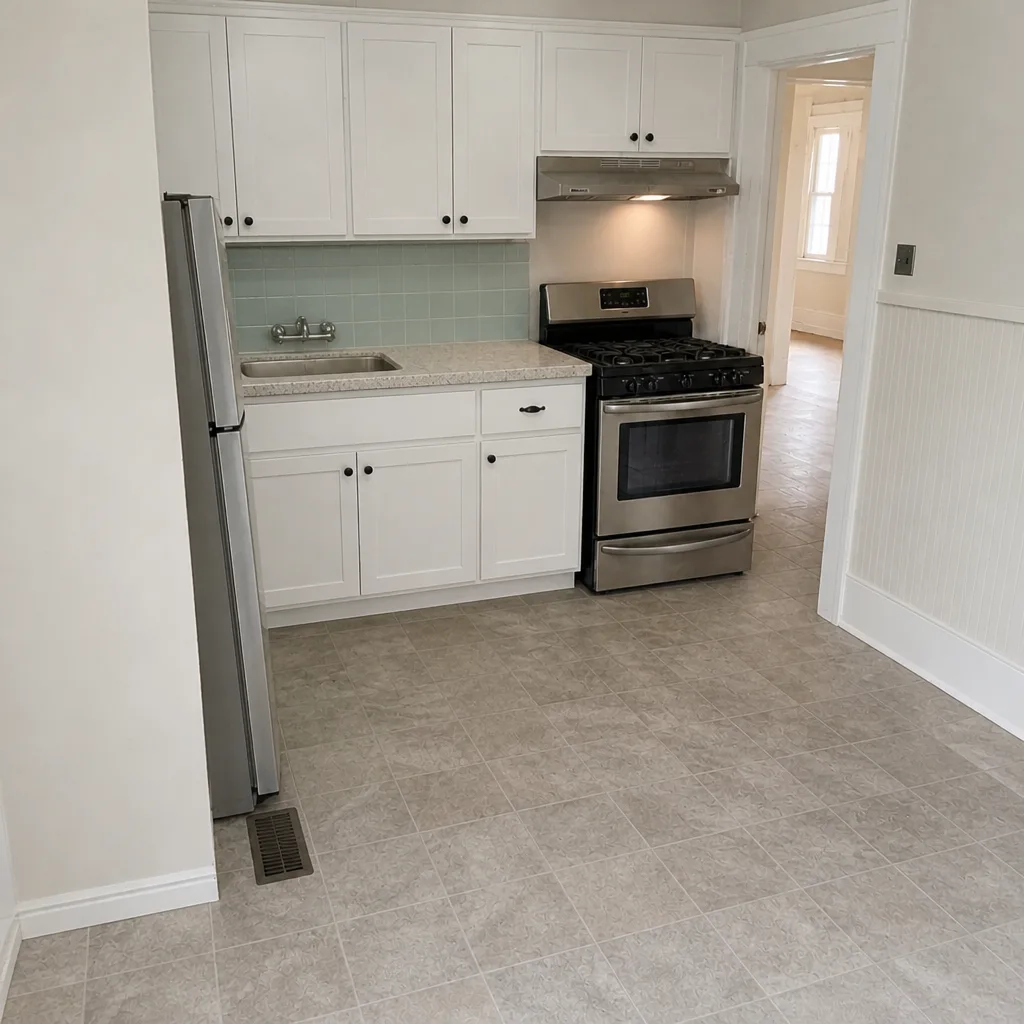 After
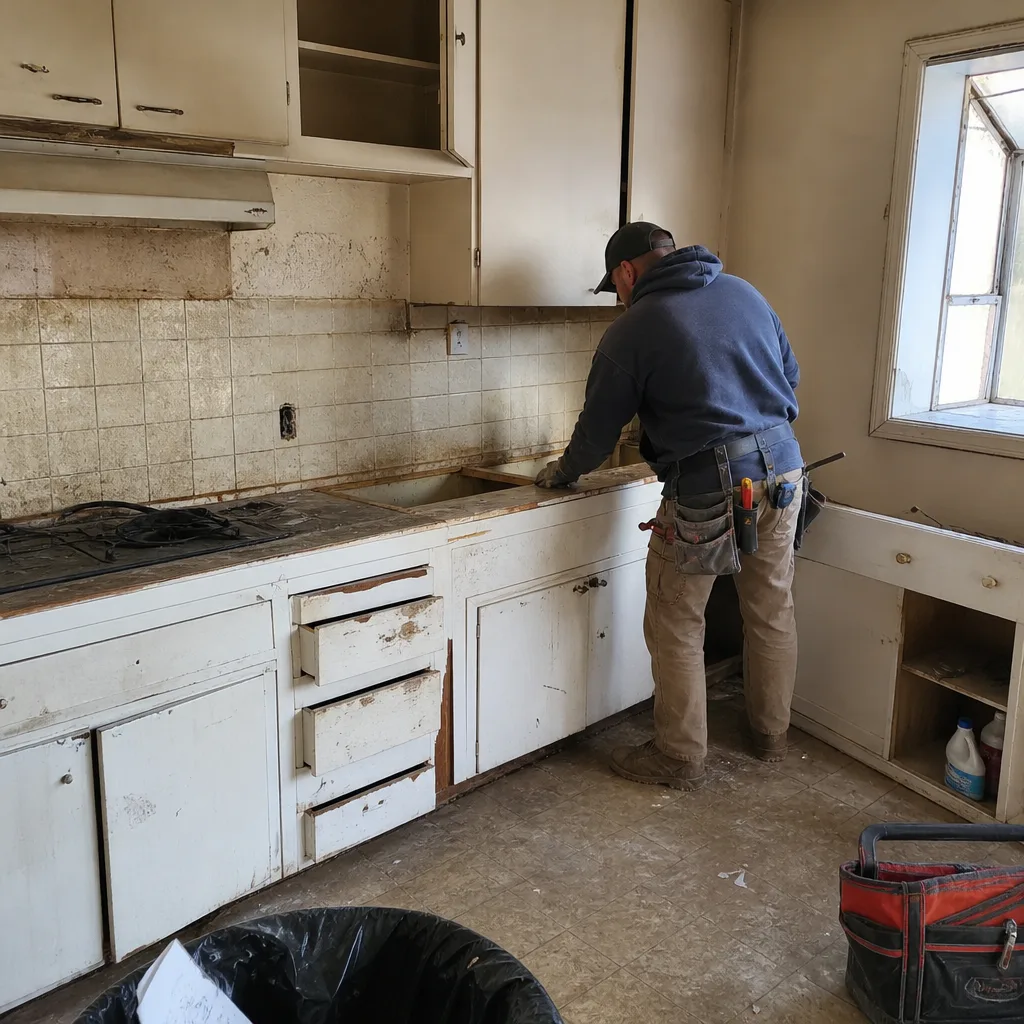 Before
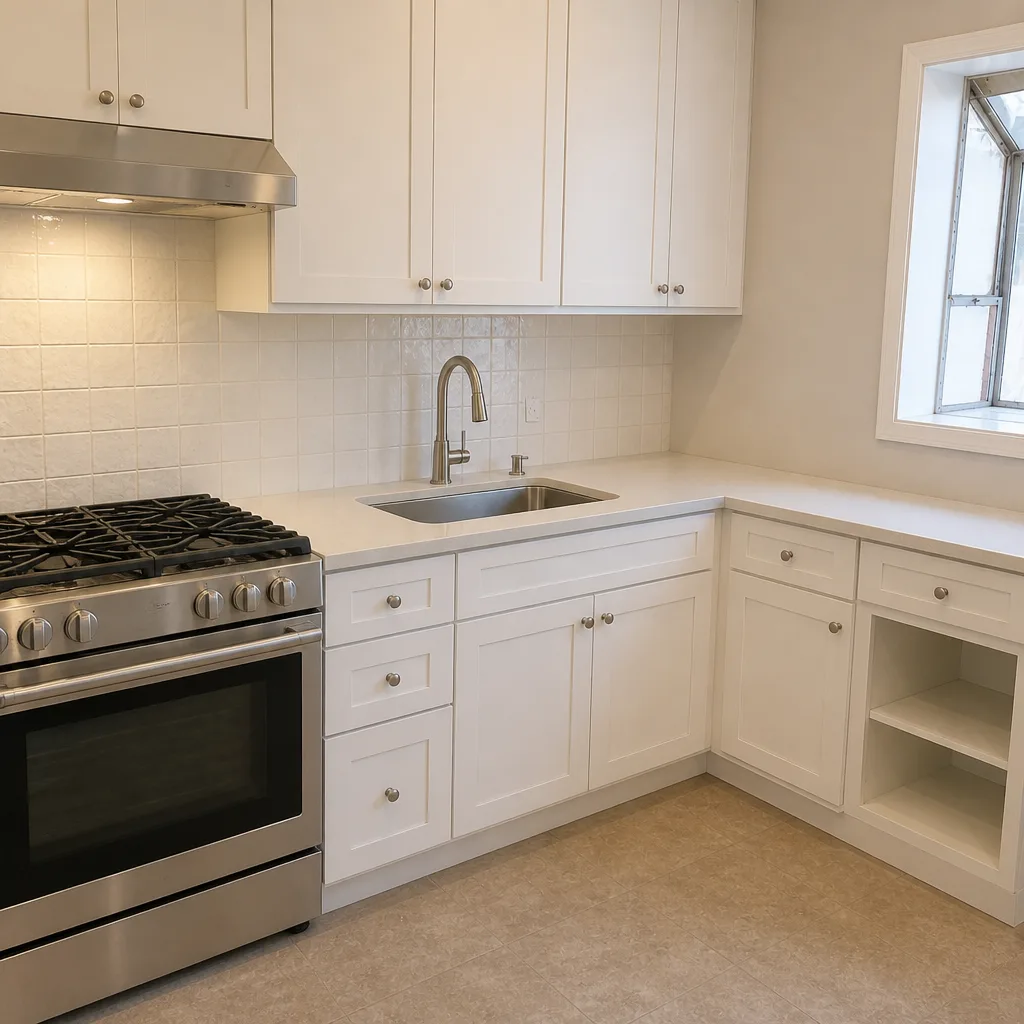 After
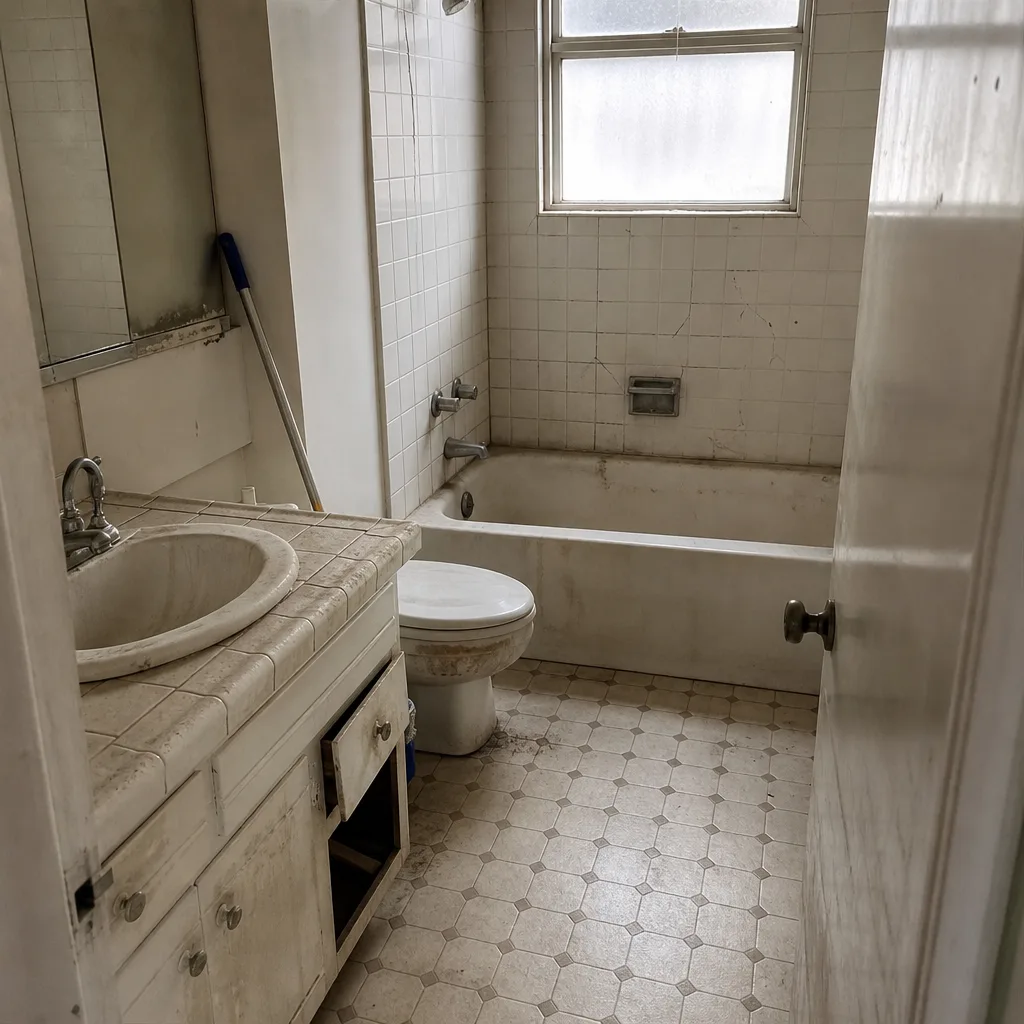 Before
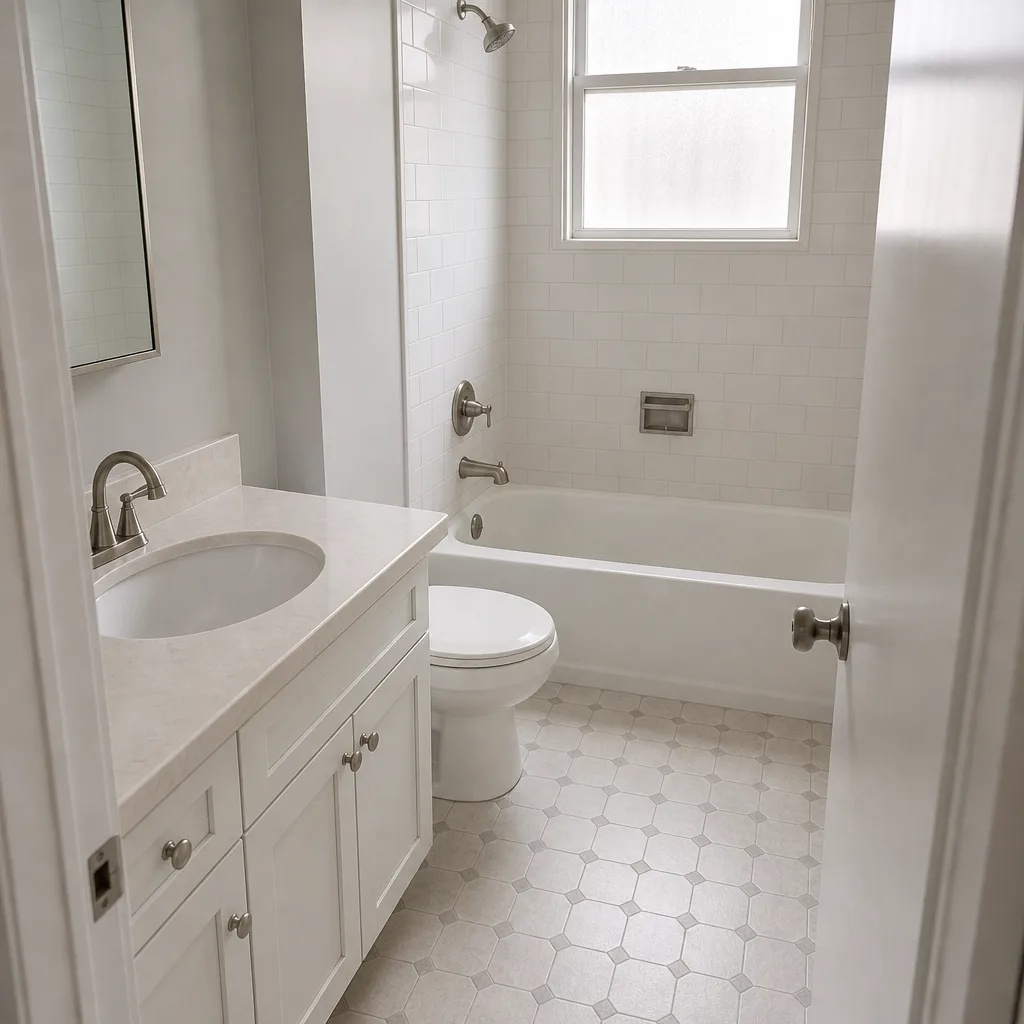 After
When to Call a Professional
Call when rocking pavers cover more than 5% of the surface, when edge restraint has moved a quarter inch or more, when efflorescence has concentrated in one zone, or when differential settlement has created a low spot that collects water. Call if you’ve spotted a rust line that wasn’t there last year. Call if the driveway is showing any of these signs and you’re about to list the home, because a buyer’s inspector will find them. Our technicians have up to 19 years of experience reading exactly this kind of condition, and every visit includes a documented photo record of what we found so you can see the evidence. Rowan Construction Group San Francisco offers free estimates in San Francisco, with a written price before any work starts. Call (844) 797-6388.
Frequently Asked Questions
Spot repairs in San Francisco typically range from $400 to $900 for a small section, partial rebuilds of a failed zone run $2,000 to $5,000, and a full base rebuild on a standard two-car driveway runs $9,000 to $18,000 depending on accessibility and disposal. The wide range is real, because a Noe Valley driveway with a 20% grade and limited street access costs more to rebuild than a flat Sunset driveway with a clean approach. We deliver a written price before work starts, so the number doesn’t move once we’re on site. Call (844) 797-6388 for an exact quote; estimates are free.
No, if the sand loss is directional. Sand that’s washed out toward the street is being carried away by water flowing under the pavers, and refilling the joints without correcting the slope or drainage will result in the same loss within one wet season. Uniform sand loss across the whole surface can be topped off as routine maintenance. Look at the pattern before you open a bag. Call (844) 797-6388 and we’ll walk you through what the pattern tells us.
It means the edge restraint has lost its anchor into the soil, usually because water has washed out the soil behind it. Once the restraint moves, the interior pavers lose the compression that keeps them tight, and the field begins to spread. That spread accelerates because each millimeter of gap lets more water in. A quarter inch in spring is three-quarters by fall if nothing is done. Call (844) 797-6388 to schedule an inspection before the next rainy season.
Uniform efflorescence, a light white dusting across the whole driveway, is cosmetic and usually stops after the pavers have dried through two seasons. Concentrated efflorescence, a bright white patch in one zone, is a signal that the base below that zone is holding moisture and needs investigation. The pavers are fine; the base is the issue. Call (844) 797-6388 and we’ll assess whether it’s a drainage correction or a base issue.
Yes, when the scope requires it. Any rebuild that changes the driveway grade, alters stormwater flow, or connects to garage drainage may require a permit from the San Francisco Department of Building Inspection. We pull the permit, schedule the inspection, and provide the signed inspection card in the documentation packet. That matters at resale. Call (844) 797-6388 to confirm whether your project needs a permit.
A spot repair of a small section is typically a single day. A partial rebuild of a failed zone takes two to three days including base prep and curing. A full driveway rebuild takes five to eight working days, plus disposal and any inspection scheduling. San Francisco weather affects the timeline more than most cities, and we build weather days into the schedule rather than promising a finish date we can’t hold. Call (844) 797-6388 for a written scope with a specific timeline for your driveway.
The Bottom Line
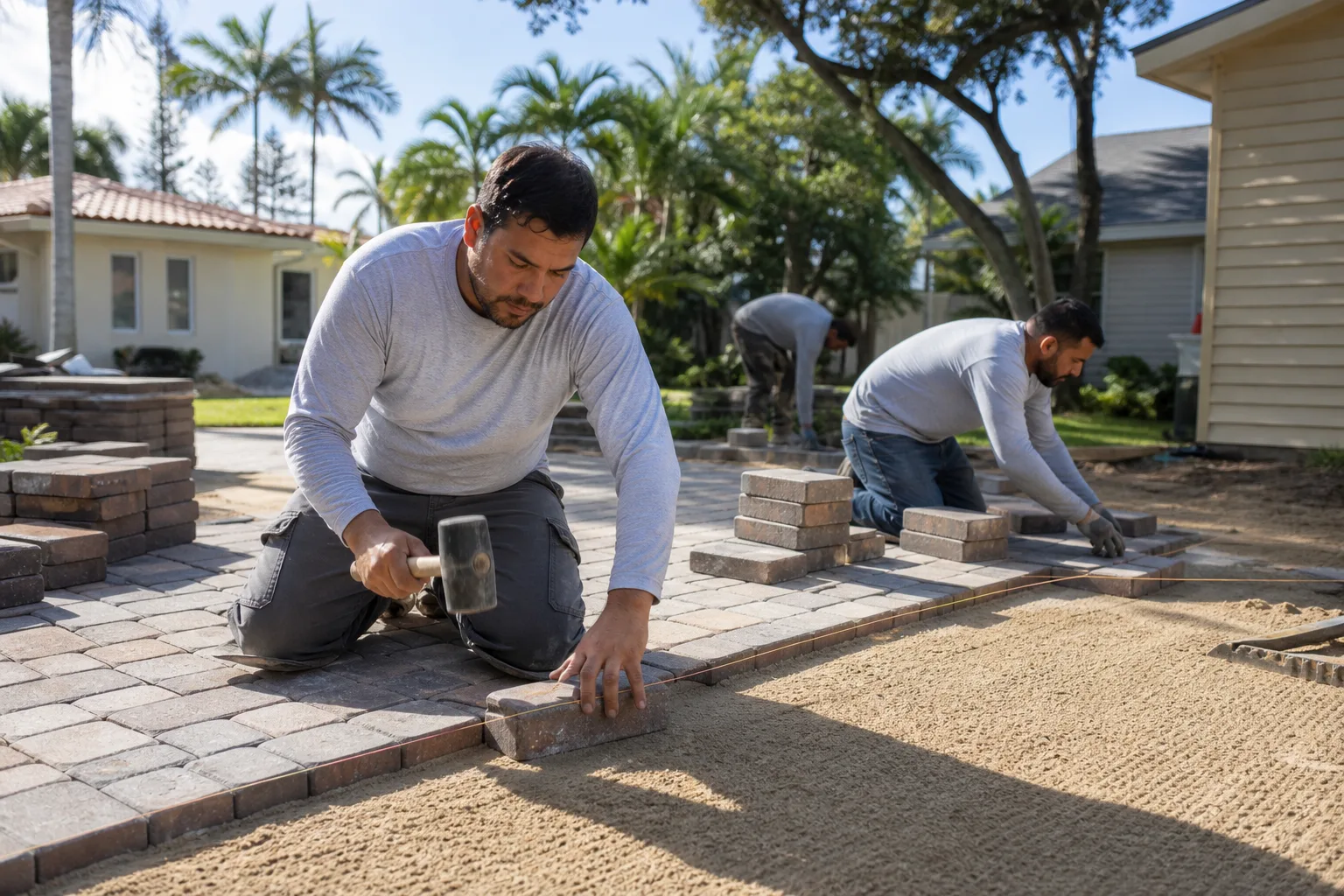
Rocking paver clusters covering more than 5% of the surface, directional joint sand loss, quarter-inch edge restraint displacement, differential settlement, and concentrated staining or efflorescence all point to the same underlying condition: the base beneath your pavers has lost contact with the aggregate layer, and water is moving through it. Uniform settlement, random staining, and a single rocking paver are surface wear, not base failure. The difference between the two is a few hundred dollars of repair or several thousand dollars of rebuild, and the signal is in the pattern, not the surface. Walk your driveway with a chalk and a level once a season. When two or more base-failure indicators are present, call us.
Rowan Construction Group San Francisco brings the same documented approach to every driveway and paver job in San Francisco, with a written flat price before work starts, a signed change order on any scope change, and the 365-Day Done Right Promise backed by The Haven Standard. If you’re also planning a larger property upgrade, our Fence Installation in San Francisco and Home Additions & ADU in San Francisco pages cover how we sequence combined work. Contact Rowan Construction Group San Francisco at (844) 797-6388 for a free estimate, and we’ll bring a written scope, a written price, and a documented photo record of every condition we find.
Written by the team at Rowan Construction Group San Francisco.